

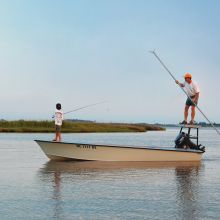
On the Outer Banks, water isn’t just the view – it’s the whole point. These narrow, wind and water-shaped barrier islands, basically just long strips of sand separated by narrow inlets, are bordered by big, blue bodies of water – the endless Atlantic Ocean to the east and the Albemarle-Pamlico estuarine system to the west.
The Albemarle-Pamlico estuarine system, what we call “the sound,” includes about 3,000 square miles of open water and is the second- largest estuary system in the United States. It actually consists of several sounds – Currituck Sound in the north behind Corolla and Duck, then Albemarle Sound, which includes Roanoke and Croatan sounds in the middle of the Outer Banks, and the vast Pamlico Sound farther south behind Hatteras and Ocracoke islands.
In this watery world, it’s no wonder so many of us get the itch to untie the lines and float away. These bodies of water offer a wide variety of boating options, none of them anything close to motoring around in a calm, deep lake. Boating in the Atlantic Ocean requires navigating tricky inlets, shoals, currents, swells and sometimes breaking waves, but the rewards are plenty: dramatic sunrises, world-class sportfishing and commercial fishing, epic wreck diving and incredible wildlife viewing.
The sounds are shallower, warmer and calmer, with room for the smaller joys of boating: anchoring up on sandbars with friends, pulling the kids on a tube, learning to sail, drifting on a skiff with a fishing rod in hand, paddling a marsh creek looking for egrets and herons. On the sounds you’ll see commercial fishermen at work, hauling nets with a line of pelicans following behind, vacationers on pontoon boats searching the waters for dolphin fins or families on a head boat pulling in croaker.
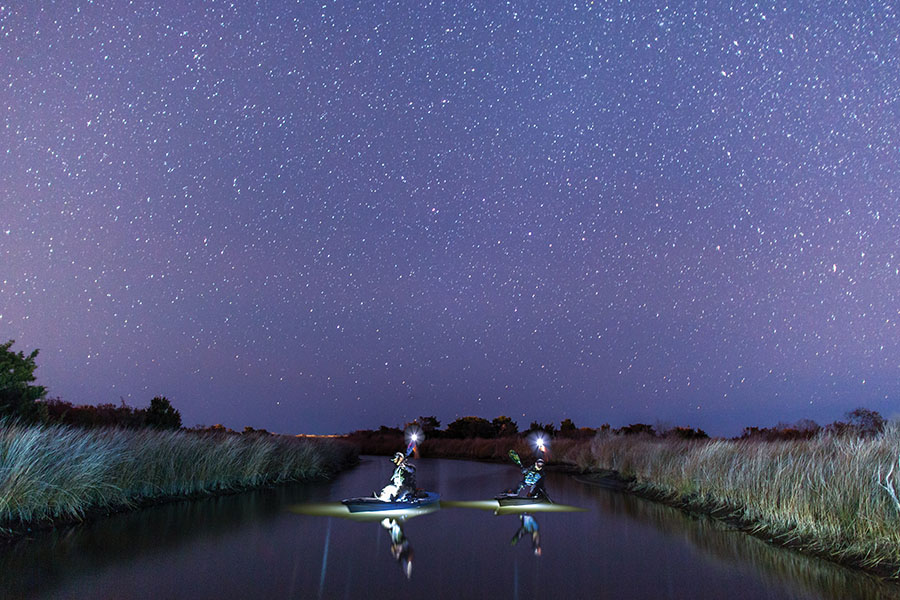
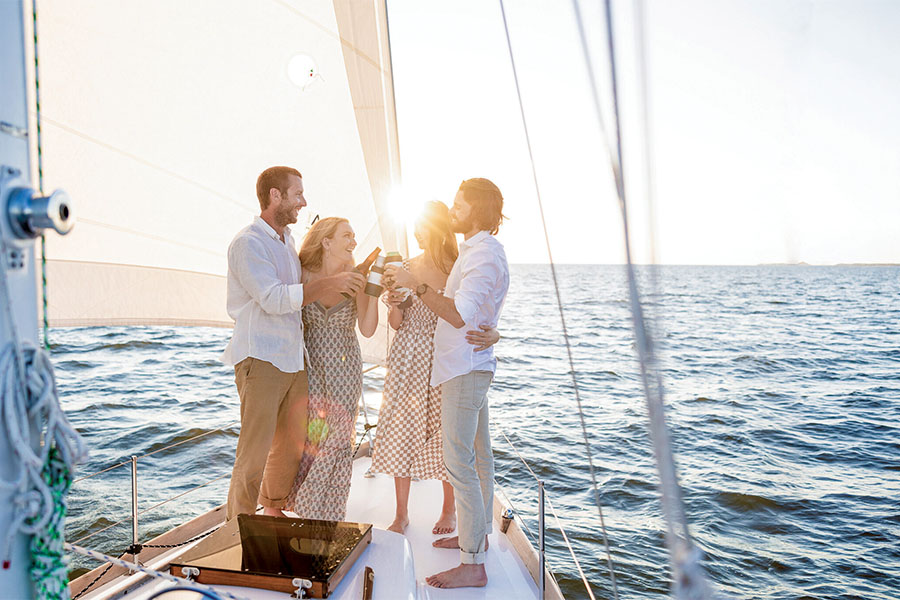
In fact, with so many ways to be on the water, a single day can hold multiple boating adventures: a sunrise standup paddleboard session in the ocean waves followed by an afternoon of wakeboarding in the sound capped off with sunset sail.
Of course, the weather calls the shots. The waters can feel like a calm lake one minute and a white-capped challenge the next. The best-laid plans are often sidelined by wind, so an Outer Banks boater has to be nimble. If there’s no wind for your sailing trip, pivot to a dolphin-watching or kayaking adventure. If a hard nor’easter is keeping you from getting out of the inlet for offshore fishing, hop in a smaller boat and cast your lines in the lee of a soundside island. Outer Banks boaters must always be prepared for changes in wind and weather, even when you’re already out there on the water.
The Places Boaters Orbit
While all of the Outer Banks is boater friendly, some places are more tuned to the boating lifestyle than others. Wanchese, Manteo, Hatteras and Ocracoke cater to boaters with marinas, docks, waterfront restaurants, fuel and ship’s stores.
Charming Downtown Manteo is genuinely boater- friendly and accommodating to those arriving by water. You can tie up to the town docks, step onto the boardwalk and immediately be in the middle of things: shops, galleries, history, ice cream, cocktails, restaurants, sunset views. Transient dockage is available. The Downtown Manteo docks are also the place to book boating adventures – sailing and sightseeing trips, dolphin tours, kayak rentals and tours, and fishing. Two marinas in Manteo also offer charter boats and boat-up dining. Three boat ramps offer sound access to the Roanoke and Croatan sounds, where you can fish, wildlife watch and anchor up (meet up with the locals at Banana Island, if you can find it).
In the working waterfront of Wanchese Harbor, boating is a way of life. Wanchese is the boat-building and commercial fishing epicenter of the Outer Banks, with docks that smell like salt, diesel and fresh fish, and enormous working vessels lined up in the harbor. Recreational boaters are welcome here too, with fishing charters and dolphin tours leaving from two marinas. Recreational boaters can find dockage for enjoying boat-up meals as well. Wanchese Harbor gives the best up-close view of the working boating lifestyle; even if you see it from the land, it will give you a sense of how deep maritime culture runs here.
Along the Nags Head Causeway and on the sound in lower Nags Head, you’ll find several businesses offering vessels to get you on the water: boat rentals, kayak and standup paddleboard rentals and tours, Jet Ski rentals and dolphin tours.
Farther down N.C. Highway 12, you’ll find Oregon Inlet Fishing Center, a storied part of the Outer Banks fishing and boating scene. Charter fishing boats, a head boat, dolphin tours, a restaurant, boat ramps, restrooms, fish-cleaning facilities and a ship’s store make this a hive of boating activity. With the fishing center’s proximity to Oregon Inlet and inshore and offshore fishing grounds and soundside sandbars, this boat ramp is one of the busiest on the Outer Banks.
Hatteras Village has a special kind of boating energy – part small-town commercial fishing hub, part sportfishing legend. It’s a short run from here out to the Gulf Stream, and the community has long been shaped by this proximity. Charter sportfishing is part of the lifeblood here, and the local knowledge is generational. In the several marinas, you can also find head boat fishing, kayak rentals, restaurants, dockage, fuel, boat ramps and everything you need to accommodate a day on the water.
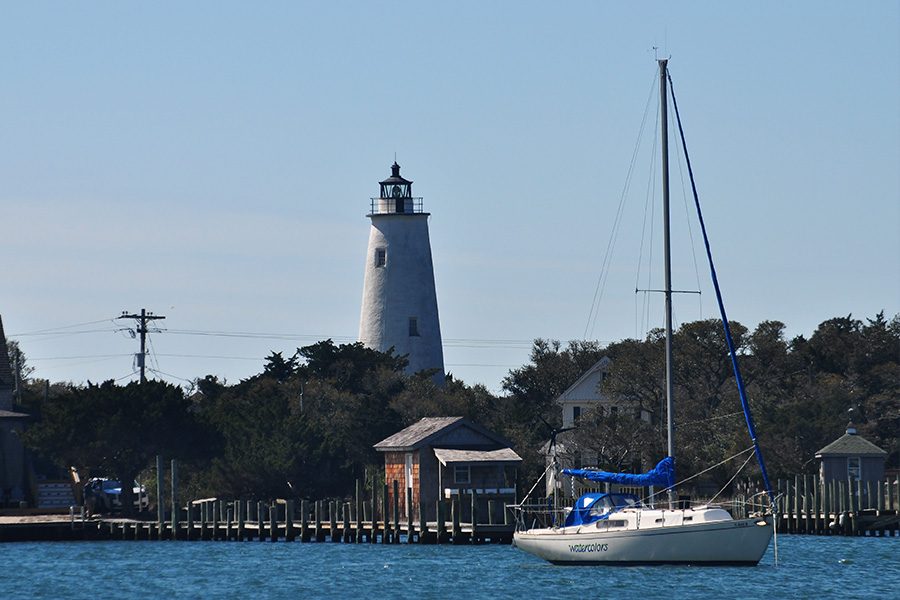
Ocracoke, the Outer Banks’ magical out island, is accessible only by boat (or small plane), and the ferry ride to the island is a veritable boating adventure that everyone loves. The centerpiece of the island is a fully protected basin harbor called Silver Lake, home to recreational and commercial vessels and a magnet for East Coast sailors and cruisers. Silver Lake is a boating hotspot with ferries gliding in and out, dinghies zipping to shore from moored boats, kayakers skirting the edges and small boats motoring in for lunch, ice, bait or beer. You can book fishing charters, sailboat tours, island hopping adventures and kayak tours at outfitters in the harbor. Transient dockage is available at National Park Service boat docks and private dock facilities, and temporary mooring in the harbor is allowed.
The above areas are the most boat-centric, but boating happens in every area of the local sounds. Currituck Sound on the Northern Outer Banks is shallower than the other Outer Banks sounds, so it’s mainly used by shallow-draft boats like skiffs, center consoles and kayaks. Croatan Sound on the west side of Roanoke Island has the feel of a locals-only paradise, while Roanoke Sound is more geared to vacation-oriented activity. Pamlico Sound is huge – 80 miles long and up to 30 miles wide in places, with depths of 5 feet to 23 feet. That leaves a lot of area to explore, but with vast stretches of open water, it can be almost as rough as the ocean at times.
The Boats that Built the Banks
Recreational boats are what most visitors see – kayaks, center consoles, pontoon boats, sailboats, sportfishing yachts and the like. But the Outer Banks boating lifestyle didn’t start with recreation. It started with survival, work and adaptation – building and using boats that fit the water.
The Outer Banks’ shallow sounds and rapidly changing weather shaped practical vessel design. A perfect example is the shad boat, developed around Roanoke Island after the Civil War and eventually adopted as North Carolina’s official state historical boat. Built for shallow water and tricky sound conditions, the shad boat played a central role in everyday fishing, hauling, delivering and commuting — it has been called a pickup truck for the water.
Then there are the small work boats – mullet skiffs, dories, crab-pot boats, tunnel skiffs and more, each shaped by the fishery and the gear – and other larger working boats like shrimp trawlers and seine netters that commercial fishermen still rely on. All of these, even the locally built sportfishers, from barebones charter boats to fancy yachts, were practically designed to navigate through weather, winds, currents, water depths and treacherous inlets.
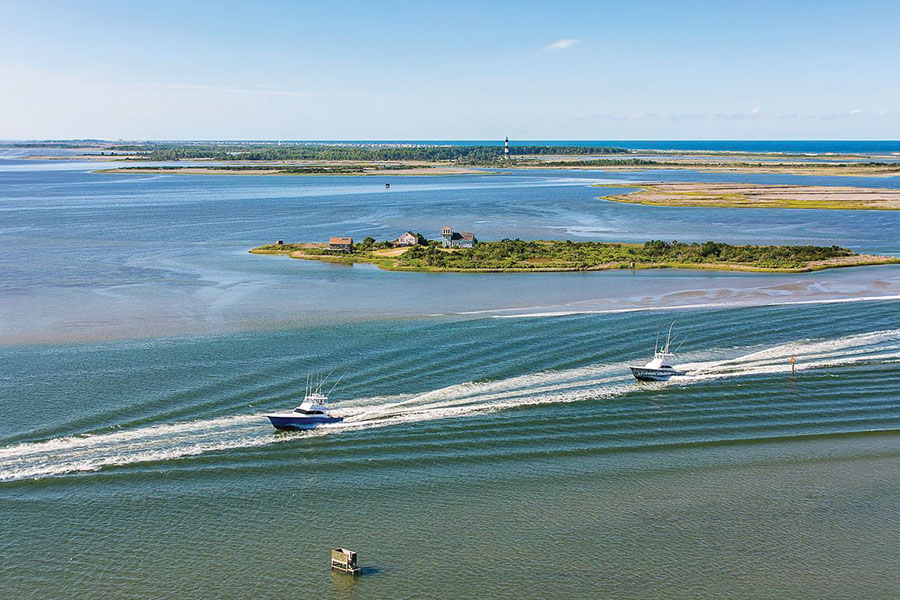
Marinas
Outer Banks marinas are hubs for inshore and offshore charter fishing and boat tours of various types. They also offer restaurants, ship’s stores and other various amenities. Some, but not all, offer dockage for transient boats.
Pirates Cove Marina, Manteo
Shallowbag Bay Marina, Manteo
Safe Harbor Outer Banks, Wanchese
Wanchese Marina, Wanchese
Oregon Inlet Fishing Center, Nags Head
Hatteras Harbor Marina, Hatteras Village
Oden’s Dock, Hatteras Village
Teach’s Lair Marina, Hatteras Village
Hatteras Landing Marina, Hatteras Village
Anchorage Marina, Ocracoke
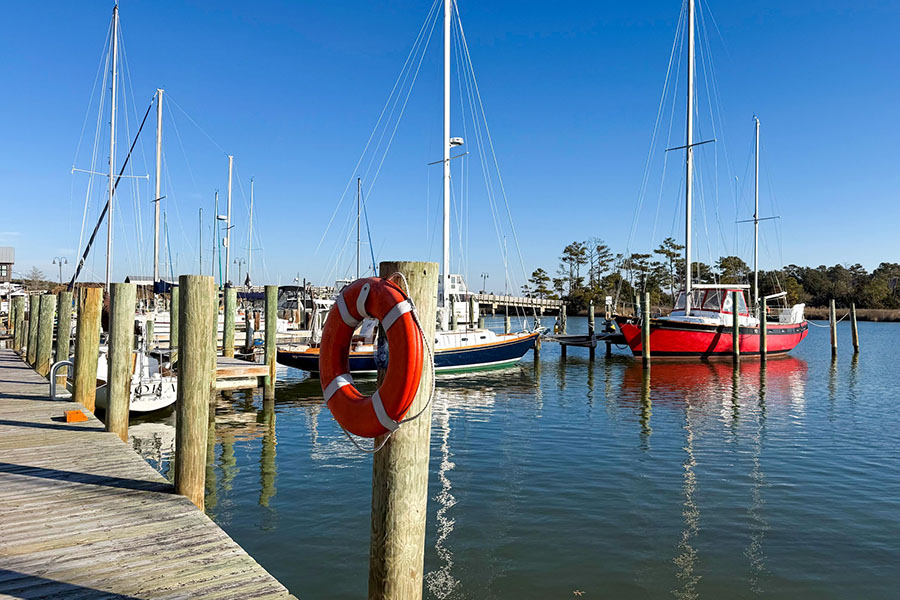
Choose Your Boating Adventure
You don’t have to own a boat or even be a boat person to enjoy boating on the Outer Banks. You can rent, charter, take a tour, hop on a ferry, paddle a creek or book a sunset cruise and still go home feeling like you know the water better than you did when you arrived.
Tours and Cruises
For families, first-timers and anyone who wants the fun without the logistics, boat tours are an easy win. Dolphin cruises are an Outer Banks classic and for good reason. Dolphins are common in our waters, and seeing them from a boat is pure magic. Sunset cruises, head boat fishing trips and sailing tours are other favorites. There are also niche experiences like island hopping, sailboat dinners, tiki boat anchoring, airboat tours, kayak and canoe excursions and pelagic birding trips in the Gulf Stream. You can even take a boat trip from Duck across Currituck Sound to visit vineyards and a winery on the mainland.
Fishing Charters
Fishing is a pillar of the Outer Banks boating lifestyle, and it scales to every budget and experience level. Want offshore action? Book a charter out of Nags Head, Manteo, Wanchese, Hatteras or Ocracoke and head for the blue water. For a calmer trip, inshore charters target drum, trout and more in the sounds and nearshore waters. Want something simple with kids? Head boats make it accessible. All you have to do is show up, hop aboard, listen to the deckhand and celebrate whatever comes over the rail. Another fun choice is a shrimping or crabbing charter in which you learn how to commercial fish and keep the catch!
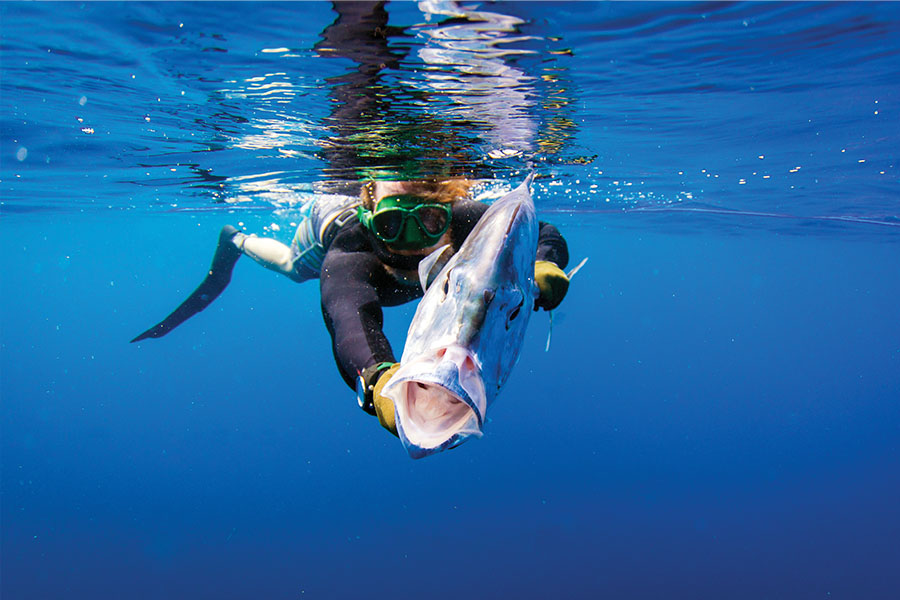
Watersports
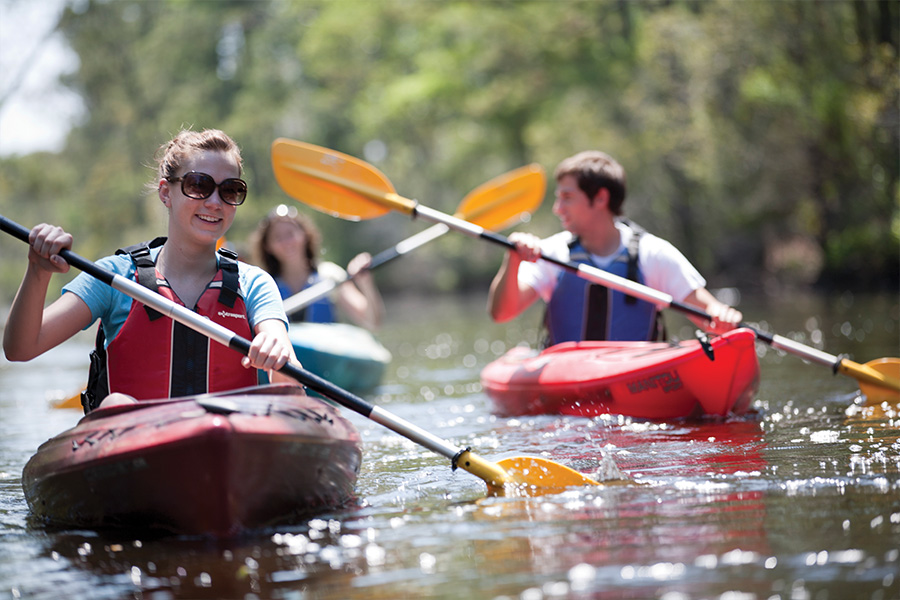
The sounds are tailor-made for watersports like kayaking and stand-up paddleboarding, which are best in calmer waters, especially around marsh edges and creeks where wildlife is active and the scenery feels untouched. For a really relaxing paddle, you can canoe in the waterways of Alligator River National Wildlife Refuge on the mainland, and maybe even see an alligator or a bear. Then there’s the high-energy side of soundside watersports: personal watercraft aka Jet Skiing, wakeboarding, waterskiing and tubing.
Boat Rentals
Boat rentals are popular on the Outer Banks. Rent a pontoon boat, and you’ve got a floating living room. Rent a skiff or center console, and you can explore shallow waters, fish, cruise to a sandbar or boat up to a restaurant. Rent a small sailboat or kayak, and you can navigate through the sound waters to see wild life. The rental companies will help you with all safety equipment and fill you in on what you need to know about the rules of the waterways.
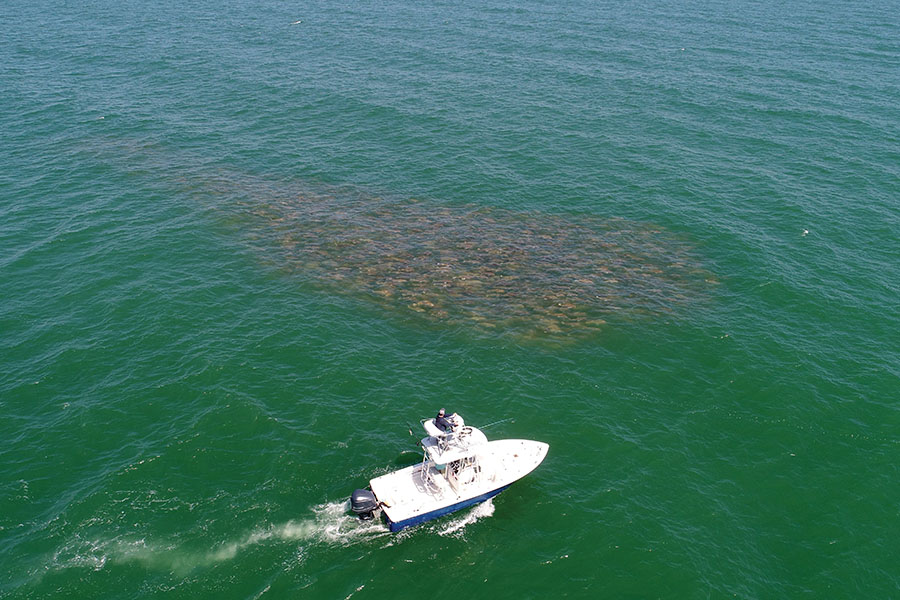
Ferries
Ferry rides qualify as boating, with all the good feels of being on the water and leaving your cares behind. You can ferry between Hatteras and Ocracoke islands on either a car ferry or passenger ferry (the passenger is available only in summer) or to Ocracoke via a ferry from the mainland at Swan Quarter or Cedar Island. On the Northern Outer Banks, the Knotts Island Ferry is a short boat ride across Currituck Sound.
Ask 10 people what the Outer Banks boating lifestyle means to them, and you’ll get 10 different answers. But all the answers come back to a feeling – the feeling of freedom that being on the water brings.
Boating has the magical ability to get you out of the rhythms of ordinary life on land. The phones disappear. The snacks taste better. You notice the beauty of clouds, birds and moving water, and you relax into the simple pleasure of being carried over the waves.
With all roads on the Outer Banks eventually leading to a shoreline, the boating lifestyle is easy here. Book a boat tour, rent a skiff, hop on a ferry, paddle a creek or bring your own vessel and leave the land in your wake.
Dock and Dine
Dock-and-dine spots are Outer Banks boating destinations. Whether you’re chasing a waterfront sunset dinner or grabbing something casual before heading back out to fish, short-term access for a boat-up meal adds a little sparkle to the day.
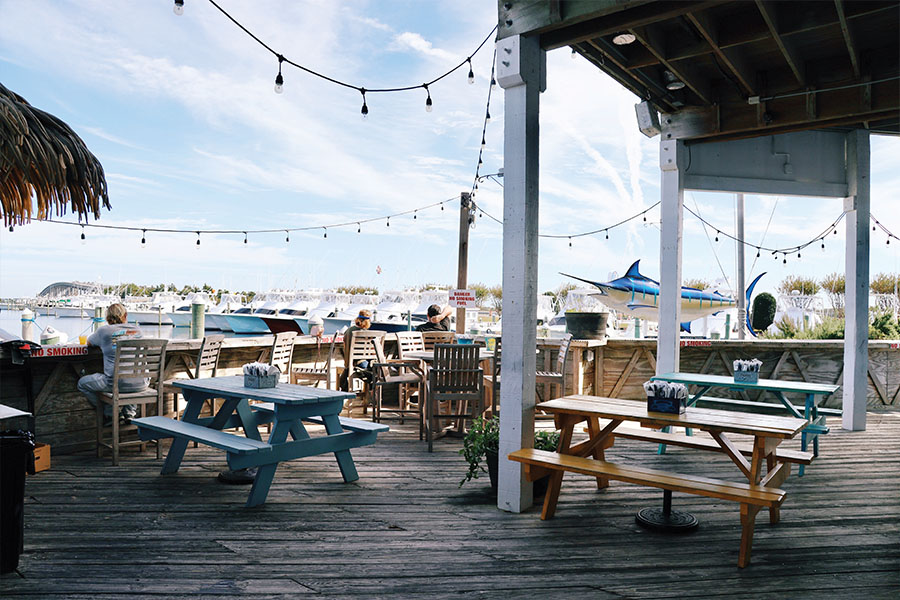
Note: Many of these restaurants are accessible by shallow-draft boat only, and approach depths can vary depending on wind direction and tides. An asterisk (*) below indicates dockages that allow deeper draft boats. Be sure to call ahead if you are concerned about access.
Currituck Mainland: Coinjock Marina Restaurant*; Barry’s Walnut Island
Corolla: Upside Restaurant & Bar
Duck: The Village Table and Tavern; Sunset Grille and Raw Bar; two docks along Town Boardwalk allow access to Aqua Restaurant, NC Coast Grill & Bar, Eventide, Coastal Cantina, The Blue Point
Kill Devil Hills: Blue Crab Tavern (drinks only)
Nags Head: Miller’s Waterfront Restaurant; Sugar Creek Restaurant; Sugar Shack Fish Market and Grill; Tale of the Whale; Basnight’s Lone Cedar Café; Fresh Fit Café; Lost Colony Brewery Waterfront Beer Garden; Benny Tosoro’s Pizza; Sea Chef Dockside Kitchen*
Manteo: Blue Water Grill & Raw Bar / Mimi’s Tiki Hut* (after 7 pm); Salt & Cypress Cocktails + Kitchen*; Downtown Manteo restaurants and bars*: Poor Richards, 1587, Vicki B’s, Olives A Greek Restaurant, Ortega’z, Lost Colony Tavern, Nouvines, Old Tom’s Tavern
Wanchese: Great Gut Deli*; O’Neal’s Sea Harvest*; Johanna’s at the Wanchese Tiki Bar*; The Landing Grill*
Buxton/Frisco: Cafe Pamlico
Hatteras Village: Breakwater Restaurant*; Harbor Grill and Deli at Hatteras Harbor Marina*; The Wreck Tiki Bar and Food and Snack Shack at Hatteras Landing*
Ocracoke Island: Ocracoke Island: SmacNally’s Waterfront Bar and Grill*; Stockroom Street Food and Deja Brew Coffee Shack*
Safety on the Water
The Outer Banks waters look like big, welcoming boating playgrounds, and they are boater-friendly, but not always. The waters here deserve deep respect. The depth of the sounds varies widely, even from day to day depending on the wind to day depending on the wind direction. Navigating the inlets requires local knowledge or deep research. Shoals move, winds pick up, currents shift with the tides. Navigation know-how, safety and weather awareness must be a top priority.
A FEW REMINDERS FOR ANYONE LAUNCHING THEIR OWN BOAT OR RENTING A BOAT HERE:
- Be aware of North Carolina boating laws: ncwildlife.gov
- Complete a North Carolina Boater Safety Course: ncwildlife.gov
- Check the marine forecast before you go, and keep checking it while you’re out.
- Have a properly fitted life jacket for everyone on board. Children younger than 13 must wear a life jacket at all times when a vessel is underway.
- Check your safety gear before you go: first aid kit, fire extinguisher, signaling device and navigation lights.
- Use updated charts and local knowledge, especially around inlets.
- Be aware of your surroundings. Give ferries and other vessels space, and avoid anchoring or lingering where working boats need room. Stay vigilant for swimmers, Jet Skiers and inexperienced boaters.
- File a float plan so that someone on shore knows where you’re going and what time to expect you back.
- Before you go out, make a plan for help if you break down or run out of gas.
- Do not operate a boat while under the influence of alcohol or drugs.
About the Author Molly Harrison
 Molly Harrison is managing editor at OneBoat, publisher of OuterBanksThisWeek.com. She moved to Nags Head in 1994 and since then has made her living writing articles and creating publications about the people, places and culture of the Outer Banks.