
Climbing a lighthouse is a rite of passage on the coast. Part cardio, part history lesson, the climb itself is part of the fun. Step by winding step, you huff and puff your way to the top, earning the view that waits above. When you step out onto that narrow platform, some 200 feet in the air, your palms and feet are tingling, your stomach full of butterflies and your grin wide. There’s nothing like standing in the salty wind, taking in a bird’s-eye view of this stunning coastal landscape.
Looking out over the barrier islands, you can imagine the generations who have relied on these lights: the keepers who tended them through long nights, the mariners who searched for their steady glow, and the countless visitors who’ve made the same climb, chasing that same unforgettable view.
Across the Outer Banks, we have four historic lighthouses — Bodie Island Lighthouse, Cape Hatteras Lighthouse, Currituck Beach Lighthouse and Ocracoke Lighthouse — but currently only two offer visitors the chance to experience that feeling firsthand. But even if a lighthouse is not open for climbing, or if you don't want to climb, it's still worth a visit to learn about the history of Outer Banks lightkeeping. Each tower has its own story, its own setting and its own perspective on the fragile ribbon of land that defines this coast.
In this blog, I'll give you the details on Outer Banks lighthouse climbing in 2026, plus fill you in about the N.C. Lighthouse Challenge, an opportunity to visit 10 North Carolina lighthouses.
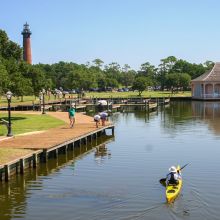
Photo: Currituck Beach Lighthouse in Corolla is the northernmost lighthouse on the Outer Banks.
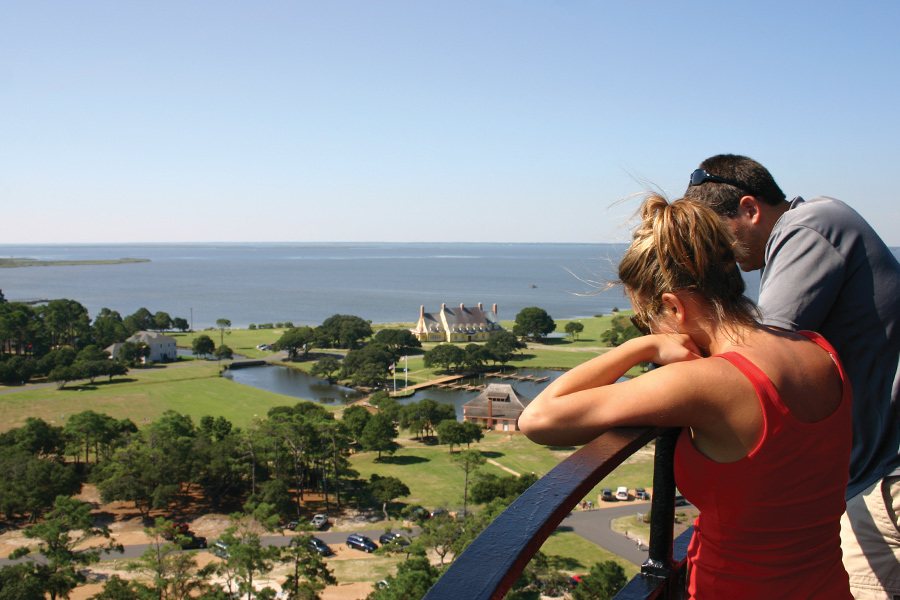
Photo: View from Currituck Beach Lighthouse
Currituck Beach Lighthouse
Corolla
Currituck Beach Lighthouse has been standing over Corolla village since 1875. It’s a red brick, unpainted lighthouse that stands 162 feet tall from the ground to the top. If you want to climb, it’s 220 steps to the top. It could take anywhere from 5 to 20 minutes to get the top, depending on how fast you climb and if you stop to read the informational panels along the way. There are nine landings for peeking out the windows and resting. Once the top, you can walk out on the landing of an amazing view of the northern Outer Banks, from the ocean to the sound.
Climbing season: March 21 to November 30
Hours: Daily 9 a.m. to 5 p.m.
How to get tickets: Easy. Show up at the front door (you will probably have to wait in line in season). Cash, checks and cards are accepted.
Admission: $13 to climb for ages 4 and older. Children ages 0 to 3 go for free. You must sign a waiver to climb.
Ages: Climbers must be at least 4 years old. Children ages 0 to 3 can go to the top in a carrier or backpack.
Other buildings on site: You can go inside the lighthouse and the museum shop, which is housed in the smaller Keeper’s Quarters. The larger Keepers’ Quarters is not open to the public.
What to do nearby: A visit to Currituck Beach Lighthouse should be part of a daytrip to Corolla because there is a lot to do nearby. Within a short walk of the lighthouse, you can visit the Outer Banks Center for Wildlife Education, Currituck Maritime Museum, Whalehead in Historic Corolla, Historic Corolla Park, boardwalks and Historic Corolla Village, where you’ll find shops and places to eat. While in Corolla you may want to take a wild horse tour in which your guide will drive you in a 4WD vehicle to the beaches north of Corolla to see the Corolla wild horses.
More information: Currituck Beach Lighthouse
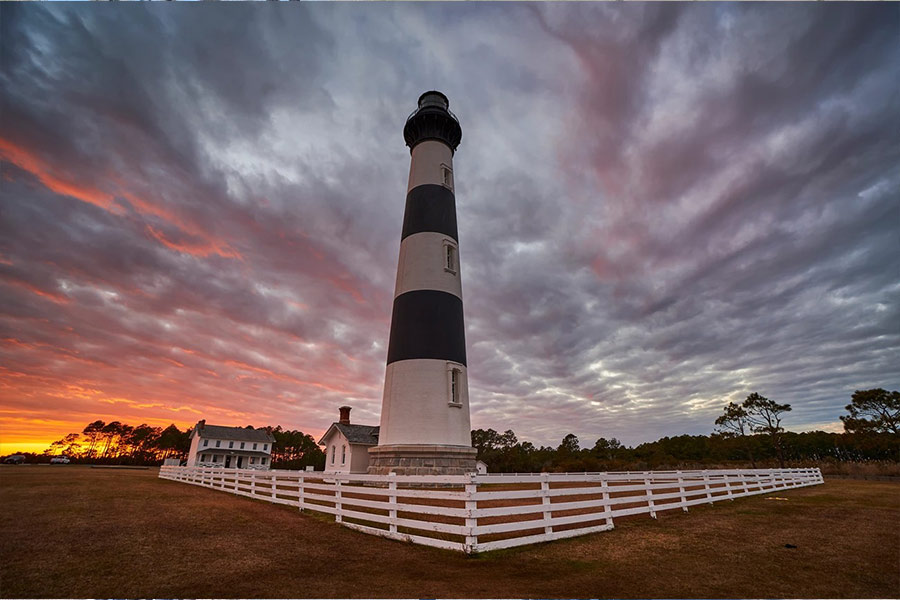
Photo: Bodie Island Lighthouse is in Cape Hatteras National Seashore on the north side of Oregon Inlet.
Bodie Island Lighthouse
South of Nags Head
Located about 10 miles south of Nags Head, Bodie Island Lighthouse is on the northern end of Cape Hatteras National Seashore. The current Bodie Island Lighthouse was built in 1872. The previous two Bodie Island Lights (c. 1847 and 1859) were built on Pea Island, south of Oregon Inlet, while this one was chosen for a site on the northern side of the north side of the inlet. Bodie Island Lighthouse is known for its horizontal black and white stripes. The lighthouse has more than 200 steps to the top, the equivalent of climbing a 10-story building. There are nine landings to rest along the way. At the top you’ll see views of the ocean, sound and open expanses of island landscape.
Climbing Season: April 22 to October 12
Days/Times Hours:
April 22 to May 7: Wednesdays through Saturdays only. Every 20 minutes from 9 a.m. to 12 p.m. and 2 to 4:20 p.m. (closed 12:20 to 1:40 p.m.)
May 8 to May 21: Daily, Every 20 minutes from 9 a.m. to 12 p.m. and 2 to 4:20 p.m. (closed 12:20 to 1:40 p.m.)
May 22 to October 12: Daily, Every 20 minutes from 9 a.m. to 5 p.m.
Climbing tickets: Plan well in advance! Start by creating your own recreation.gov account well before you plan to visit. Climbing tickets go on sale at 7 a.m. and may only be purchased on the same day of your intended climb. Tickets are only available for purchase here. Get there 5 minutes before your time slot or you may lose your spot.
Admission: $10 for adults, $5 for senior citizens (62 or older), children (11 and younger) and the disabled.
Ages and limits: Children younger than 11 must be accompanied by someone age 16 or older. No one is allowed to be carried; you have to walk yourself. Climbers must weigh less than 260 lbs. and must be at least 42” tall.
Other buildings on site: The Keepers’ Quarters at Bodie Island Lighthouse house a museum and a visitors center. You will learn a lot about Outer Banks maritime history and lighthouses here. And the friendly staff can answer your questions about Cape Hatteras National Seashore.
Full Moon Climbs: Bodie Island Lighthouse also offers Full Moon Climbs on recreation.gov – if you can snag a ticket! Tickets go on sale at 7 a.m. on the day of the climb. Check the website for Full Moon C
What to do nearby: Bodie Island Lighthouse is in a somewhat remote stretch of Cape Hatteras National Seashore. On site is a great hiking trail and boardwalk with an overlook of the marsh. Across the street is the Coquina Beach Access and Bathhouse, which is lifeguarded in the summer. Down the road a few miles is Oregon Inlet Fishing Center, where you can shop, watch the charter boats come in in the afternoon, and soon eat a meal in their new restaurant. Be sure to drive over the Basnight Bridge, which crosses over Oregon Inlet. It’s one of the best views on the Outer Banks. On the south side of the bridge is a catwalk fishing pier.
More information: Lighthouse Climbs - Cape Hatteras National Seashore
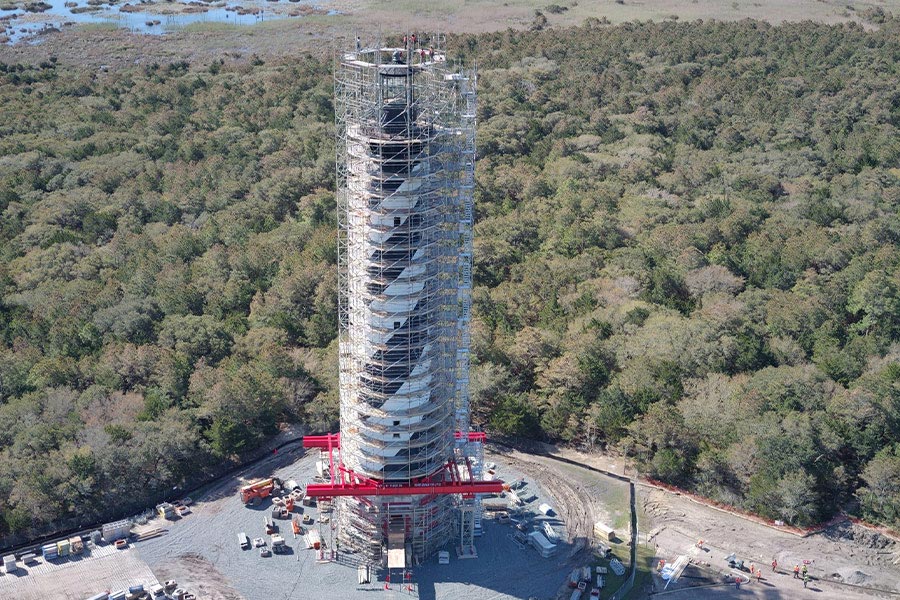
Photo: Cape Hatteras Lighthouse in Cape Hatteras National Seashore is currently closed for repairs and restoration and will not be open for climbing this year.
Cape Hatteras Lighthouse
Buxton
Unfortunately, Cape Hatteras Lighthouse on Hatteras Island is still closed for climbing this year and will not reopen in the summer of 2026. The lighthouse is currently undergoing restoration efforts. Cape Hatteras Lighthouse was built from 1868 to 1870 and is the tallest traditional lighthouse in the United States. Its distinctive black and white diagonal stripes are covered up this year with scaffolding as part of its restoration. The lighthouse location by the ocean makes it exposed to salt air, high winds and intense sunlight, and repairs are constant. The National Park Service is repairing its deteriorated masonry, metal components, windows, marble flooring and lantern. Pediments, windows and missing interior doors were restored, and the lighthouse will get a fresh coat of paint on the interior and exterior. While it was supposed to open this summer, repairs have extended until at least the end of 2026 due to recently discovered metal cracking in most of the 16 cast-iron brackets that support the lighthouse’s gallery decking — the exterior platform encircling the light at the top of the 198-foot structure.
What to do nearby: You can still visit the Museum of the Sea and the Park store that’s onsite at the museum. You can also walk the Buxton Woods Trail or Open Ponds Trail. Buxton village is home to several restaurants and shops.
More information: Cape Hatteras Light Station - Cape Hatteras National Seashore
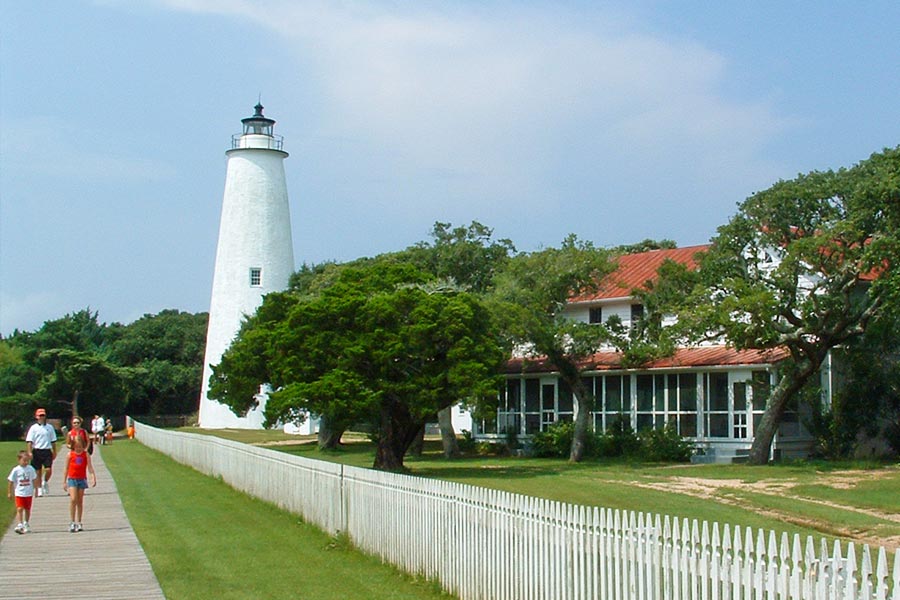
Photo: Ocracoke Lighthouse is a picturesque setting in the heart of Ocracoke village.
Ocracoke Lighthouse
Ocracoke village
Dating back to 1823, Ocracoke Lighthouse is the oldest operational lighthouse in North Carolina and the third oldest in the United States. Ocracoke Lighthouse is not open to climbing. But you can visit the picturesque site and see the charming, white-washed lighthouse and its outbuildings. The lighthouse is only 75 feet tall, so it’s the shortest of the Outer Banks lighthouses. The lighthouse celebrated its 200th anniversary in 2023. You can take a virtual tour here.
What to do nearby: If you make the ferry ride over to Ocracoke Island to see the lighthouse, there is plenty more to do while you’re there. Ocracoke village is small and perfect for walking, biking or golf-carting. There are several restaurants, shops and historic sites around town plus an excellent walking trail known as Springers Point. The beach here is incredible, and there are watersports activities as well.
More information: Ocracoke Light Station - Cape Hatteras National Seashore
N.C. Lighthouse Challenge
North Carolina is home to 10 lighthouses:
1875 Currituck Beach Lighthouse in Corolla
1872 Bodie Island Lighthouse in Nags Head
1877 Roanoke Marshes Lighthouse in Manteo
1870 Cape Hatteras Lighthouse in Buxton
1824 Ocracoke Lighthouse on Ocracoke
1859 Cape Lookout Lighthouse on the Core Banks
1958 Oak Island Lighthouse on Oak Island
1817 Old Baldy Lighthouse on Bald Head Island
1866 Roanoke River Lighthouse in Plymouth
As part of the America250 celebrations, if you visit all 10 of these lighthouses by December 31, 2026, you will be awarded a personalized certificate from Currituck County as well as earn a free lighthouse climb. Learn more about this program and register here. To learn about all of the North Carolina lighthouses, visit the North Carolina Lighthouse Society's website.
About the Author Molly Harrison
 Molly Harrison is managing editor at OneBoat, publisher of OuterBanksThisWeek.com. She moved to Nags Head in 1994 and since then has made her living writing articles and creating publications about the people, places and culture of the Outer Banks.