

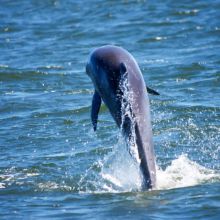
Thanks to its diverse mix of ecosystems – ocean, dunes, sound, marshes and estuaries, maritime forests – and a wealth of protected lands from national parks and wildlife refuges to state parks and nonprofit conservation lands, the Outer Banks is home to an incredible variety of wild creatures. In fact, these barrier islands and the surrounding mainland areas are considered one of the most biologically diverse regions in the United States.
Wild horses roam the northern beaches, dolphins regularly cruise the ocean and sound waters, sea turtles nest on our sands each summer, and hundreds of species of birds live or visit here throughout the year. Giant black bears, playful river otters, alligators, foxes, deer and countless other native species make the Outer Banks a world-class wildlife-watching destination.
Whether you're walking a quiet beach at sunrise, fishing in the Gulf Stream, paddling through a marsh, hiking a nature trail or simply relaxing on your deck, you’ll most likely encounter a variety of Outer Banks wildlife.
But if you want to be more intentional about your sightings, consider taking a tour with a professional guide who knows where to find wildlife and how to view them safely (for you and the animals) and who can educate you about the wildlife and their ecosytems in the process.
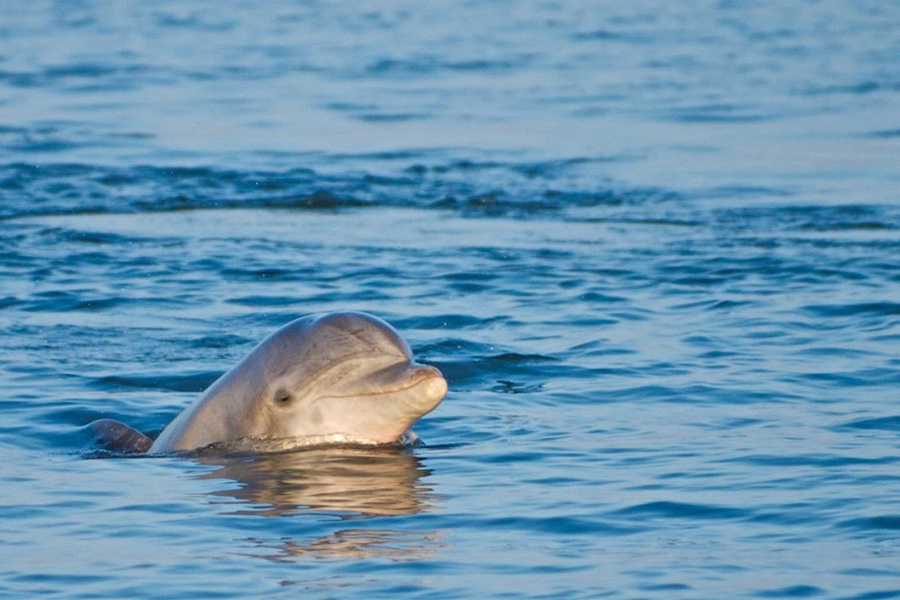
Photos above: Bottlenose dolphin are a common sighting in the Outer Banks waters, and an easy way to see them is on a dolphin tour. Photos courtesy of Paradise Dolphin Cruises.
Bottlenose Dolphins
Of all the sea life you might encounter on the Outer Banks, from fish to jellyfish to rays to sea turtles (and possible seal or whales in winter), dolphins are most beloved. These playful creatures just seem to know how to live a joyful life, and they are quite visible in both the ocean and the sound. You might see them from the beach or a pier on a calm day, but if you want a pretty much guaranteed sighting, the best way is with a guided Outer Banks dolphin tour in the sound.
Dolphin tours run in the Pamlico, Roanoke and Croatan sounds, and the guides are familiar with the dolphins’ habits, so they know where to find them. They also know individual dolphins by the shape of their fins! You’ll learn a lot about these creatures on a tour.
Here are some companies that will take you:
Paradise Dolphin Cruises Safe Harbor Marina, Wanchese
Harbor Star Dolphin Tours Wanchese Marina, Wanchese
Captain Johnny’s Dolphin Tours Manteo Waterfront
OBX Tiki Time Manteo Boat Cruises & Dolphin Tours Manteo Waterfront
Crystal Dawn Head Boat Dolphin Cruise Pirates Cove Marina, Manteo
Miss Oregon Inlet II Head Boat Dolphin & Sunset Tour Oregon Inlet Fishing Center, Nags Head
Nags Head Dolphin Watch (book through Kitty Hawk Kites) Whalebone Watersports in Nags Head or at Shallowbag Bay Club Marina in Manteo
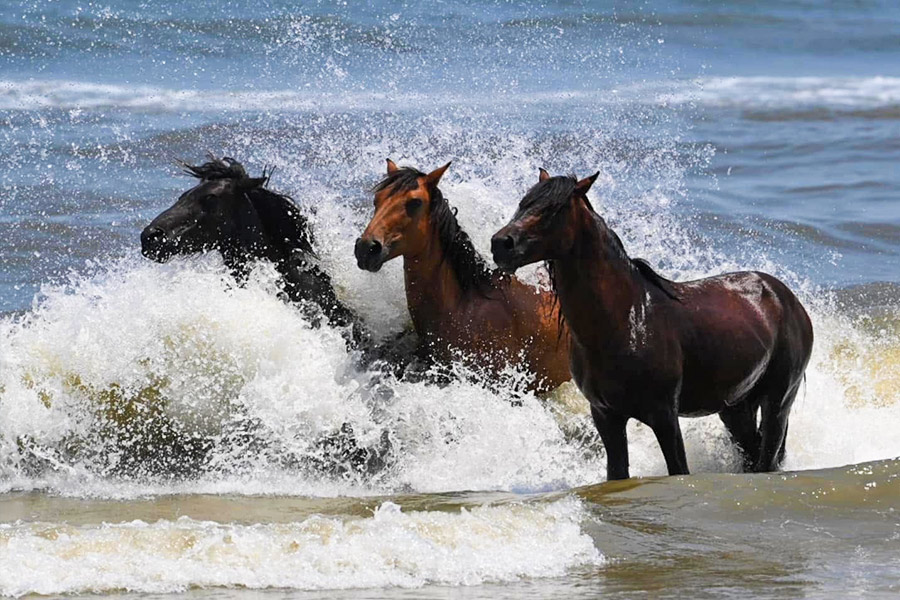
Photo: Wild horses are a common sight on the beaches and behind the dunes of the 4WD area north of Corolla. Local guides offer daily tours. Photo courtesy of Bob's Corolla Wild Horse Tours.
Wild Horses
A unique breed of wild horses known as Banker horses reside on the beaches north of Corolla and are recognized as a significant cultural and historical resource by the state of North Carolina (they were designated as the North Carolina State Horse in 2010). The herd is protected and monitored by the nonprofit Corolla Wild Horse Fund Inc. of Corolla. To learn more about the horses you can visit the Corolla Wild Horse Museum and Store at 1130 Corolla Village Road in Corolla.
You can also drive up to the four-wheel-drive area north of Corolla yourself and try to find them, though be forewarned that you must have a 4WD vehicle (not AWD). There are no paved roads and this is a tough area to explore on your own.
The best option is to take a tour with any one of a number of wild horse tour companies based in Corolla. The tour companies have the insider's knowledge that pretty much guarantees a sighting, and the guides will educate you about the horses and the ecosystem along the way.
Remember, it is against the law to be within 50 feet of the horses (that’s five car lengths) or to feed or bother them in any way. It’s especially important to never feed a wild horse, even apples or carrots. Any foods not in their regular natural diet can cause severe digestive distress or even death.
Here are the companies that will take you to see the wild horses on the four-wheel-drive beaches north of Corolla:
Back Country Wild Horse Safari
Bob's Corolla Wild Horse Tours
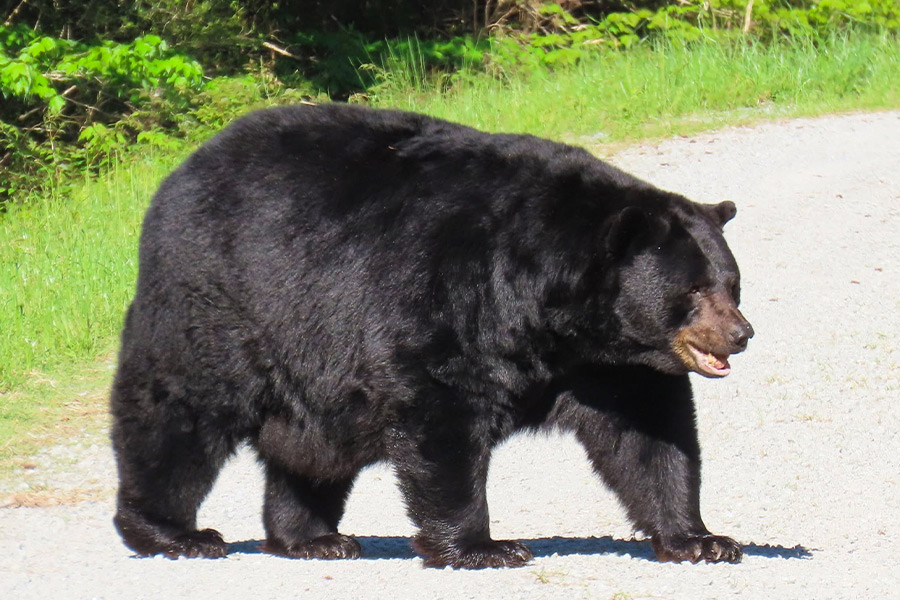
Photo: Giant black bears and their cubs can be seen in Alligator River National Wildlife Refuge, which is only about a 20-minute drive from the Outer Banks. Photo courtesy of Coastal Wildlife Refuge Society Facebook
Bears, Alligators and Maybe a Red Wolf
Eastern North Carolina is home to one of the densest populations of black bears in the world, and Alligator River National Wildlife Refuge, which was very close to the Outer Banks, has the largest population of black bears in the region. Most active in the early morning and late afternoon, these giant creatures are easily seen in the refuge in the warmer months.
Black bears are generally shy and non-aggressive, posing minimal risk to humans. They are omnivores, feeding on berries, nuts, insects, plants, and occasionally agricultural crops like corn and peanuts.
You can see the bears yourself by driving along the roads of Alligator River National Wildlife Refuge. The roads are not paved, but they are groomed and fine for a standard car. However, the refuge is huge – about 152,000 acres – so if you want to narrow down your chances of being in the right place at the right time, you can attend the Bear Necessities program at Alligator River National Wildlife Refuge.
In Bear Necessities, a guide will teach you about the bears and why the refuge makes a good home for them. After a 30-minute presentation, you are free to explore the refuge in your vehicle to look for bears and other wildlife. The presenter will steer you in the right direction and provide maps. Click here to learn about the bear program and other wildlife viewing opportunities offered at the refuge.
Do not feed the bears! This habituates them to humans and causes problems for everyone, especially the bears. In fact, some areas of the refuge have recently been closed to driving because of humans feeding the bears.
While in the refuge, keep your eyes open for alligators in the ditches and ponds. Sometimes they are half-submerged so you have to look closely. You’ll also see a variety of birds, possibly eagles and owls, and you might see small mammals like otter, nutria, coyote, bobcat, raccoon, possum and fox.
If you’re really, really lucky, you might see a red wolf. Alligator River National Wildlife Refuge is one of the very few places on earth where you can see the endangered red wolf, a species that was once declared extinct. Thanks to extreme conservation efforts, there are now 22 adult red wolves and numerous pups in Alligator River National Wildlife Refuge, Pocosin Lakes National Wildlife Refuge and nearby private lands. The adults are collared with a tracking device, so if you’ll see one, you’ll know it!
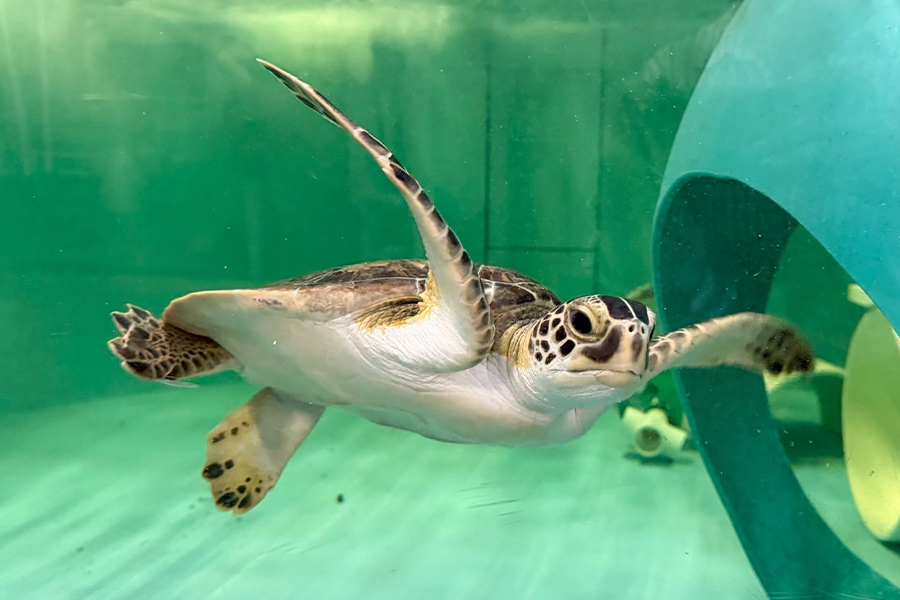
Photo: The sea turtles at the STAR Center reside in plastic tubs until they are ready to be returned to the wild. Photo courtesy of North Carolina Aquarium on Roanoke Island
Sea Turtles
Five species of sea turtles are found in the waters alongside the Outer Banks - the leatherback, hawksbill (rarely seen), Kemp's ridley, loggerhead and green. The female loggerhead and green turtles and occasionally the leatherback and Kemp's ridley turtles nest on the Outer Banks beaches, which are considered to be the northern limits of their nesting grounds. Hawksbills were documented nesting on Cape Hatteras for the first time in 2015, with two nests laid by a single female.
Even though there are hundreds of sea turtle nests along the Outer Banks beaches in the summer months, it’s a very rare treat to actually spot a sea turtle laying her nest or the hatchlings emerging from their nest. Several groups, including Cape Hatteras National Seashore, U.S. Fish & Wildlife and the Network for Endangered Sea Turtles closely monitor the nests and ensure that the hatchlings make it safely to sea, so you might happen upon a hatching event, which will almost certainly be attended by one of these groups.
To help protect sea turtles, be sure to keep out of the marked nesting sites (including your pets), to clean up all your beach gear and refill any holes on the beach after you leave, and to keep oceanfront light pollution to a minimum.
The best way to see real, live sea turtles is at the Sea Turtle Assistance and Rehabilitation (STAR) Center at the North Carolina Aquarium on Roanoke Island. Though not in the wild at the center, these turtles have been rescued from the wild due to a number of factors and most will return to the wild once they are rehabilitated.
After the sea turtles are rehabilitated, they are released back to the sea. These release events are also a good way to see a live sea turtle. Follow the North Carolina Aquarium on Roanoke Island on social media to keep track of these release events.
When you pay for admission to the North Carolina Aquarium on Roanoke Island, you can walk through STAR Center and see some of the residents swimming in their big warm pools. A volunteer or a staff member is on hand to answer questions. You can find all the information you need here.
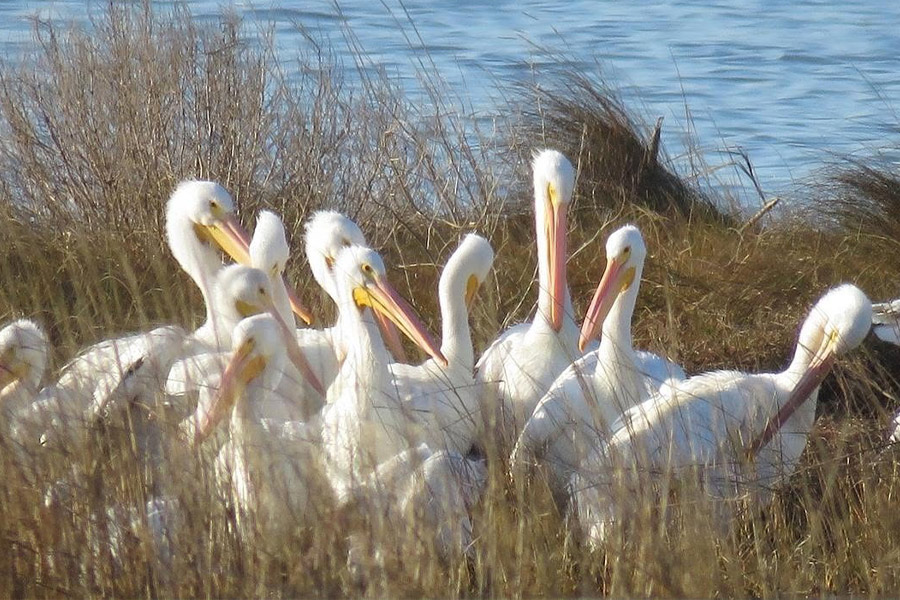
Photo: White pelicans, rarer here than brown pelicans, visit the Outer Banks in the winter months. Photo courtesy of Wings Over Water Wildlife Festival
Birds
The Outer Banks is a world-class birding destination with more than 400 species visible here throughout the year, including songbirds, shorebirds, raptors, waterfowl and seabirds. Part of the reason for this diversity is that the Outer Banks is situated along the Atlantic Flyway, a major migratory route. This brings a huge variety of waterfowl in the winter, but no matter what time of year you are here, you’ll see and hear a great diversity of birds.
The fun thing about birding here is that species vary greatly depending on the time of year.
For instance, in summer, we see a lot of brown pelicans, osprey, American oystercatchers, terns, willets, sandpipers, sanderling. In fall and spring, warblers and songbirds pass through. In winter, waterfowl like snow geese, tundra swans and a huge variety of ducks arrive.
You can see a great variety wherever you are, but some concentrated places to look include the national wildlife refuges (there are 11 in northeastern North Carolina!), Cape Hatteras National Seashore, Jockey’s Ridge State Park, Pine Island Audubon Sanctuary, Nags Head Woods, Kitty Hawk Woods, Buxton Woods … basically any natural area.
If you want help locating birds and interpreting their songs, a great option is the Pea Island Bird Walk. This free guided tour is held on Fridays from 8 to 9:30 a.m. Whether you're a beginner or an expert, you'll enjoy this casual stroll beside North Pond. Field guides, binoculars, sunscreen, and insect repellent are recommended. Some field guides and binoculars will be available for loan.
For a really exciting trip, book a seabirding trip on the Stormy Petrel II. The boat is currently docked at Oregon Inlet Fishing Center and takes trips to the Gulf Stream to see the birds that live out at sea, including a huge variety of shearwaters and petrels. Along the way, you’ll likely see sea turtles, dolphins and maybe sharks and whales. Learn about the trips here.
A great way to see a variety of birds via guided tours is the Wings Over Water Wildlife Festival in October. The 2026 festival will be held October 13 to 18 and include not only a huge variety of birding sessions but also photography workshops, natural history talks and other wildlife tours. A second session of the festival is held December 4 to 6 for betting chances of seeing migratory birds and waterfowl. Book sessions early as this is a very popular event.
About the Author Molly Harrison
 Molly Harrison is managing editor at OneBoat, publisher of OuterBanksThisWeek.com. She moved to Nags Head in 1994 and since then has made her living writing articles and creating publications about the people, places and culture of the Outer Banks.