

In 2026 The Elizabethan Gardens, one of the Outer Banks’ most enchanting landscapes, celebrates its 75th anniversary. It’s what Queen Elizabeth I, for whom the gardens are named, would have called a Diamond Jubilee.
While the staff prepares for this milestone celebration in the fall, spring is the perfect time to experience The Elizabethan Gardens in its most colorful season. Strolling shaded brick pathways framed by centuries-old live oaks and a riot of spring blooms, you will feel the presence of nature, art and history.
The Elizabethan Gardens started with a simple idea planted decades ago and has blossomed into one of the Outer Banks’ most beloved cultural landscapes. It began in 1950 when a small group of visionaries visited nearby Fort Raleigh National Historic Site and attended a performance of The Lost Colony. Inspired by the history surrounding them, they imagined creating a garden that would serve as a living memorial to Sir Walter Raleigh’s lost colonists.
They presented their idea to the Garden Club of North Carolina, a nonprofit organization of thousands of members dedicated to conservation and beautification, and in 1951, the club voted to build the garden adjacent to Fort Raleigh. The original plan, opened in 1960, was a modest 2-acre garden meant to reflect what a successful colonist might have planted had the Roanoke settlement thrived.
Over time, thanks to the dedication of garden club members, supporters, donors, volunteers and staff, The Elizabethan Gardens has grown well beyond that original concept. Today it encompasses more than 10 acres of carefully designed landscapes, sculpture and historic inspiration.
Now is the perfect time to explore The Elizabethan Gardens.
“The spring is quite magnificent here,” says Executive Director Brendan Medlin.
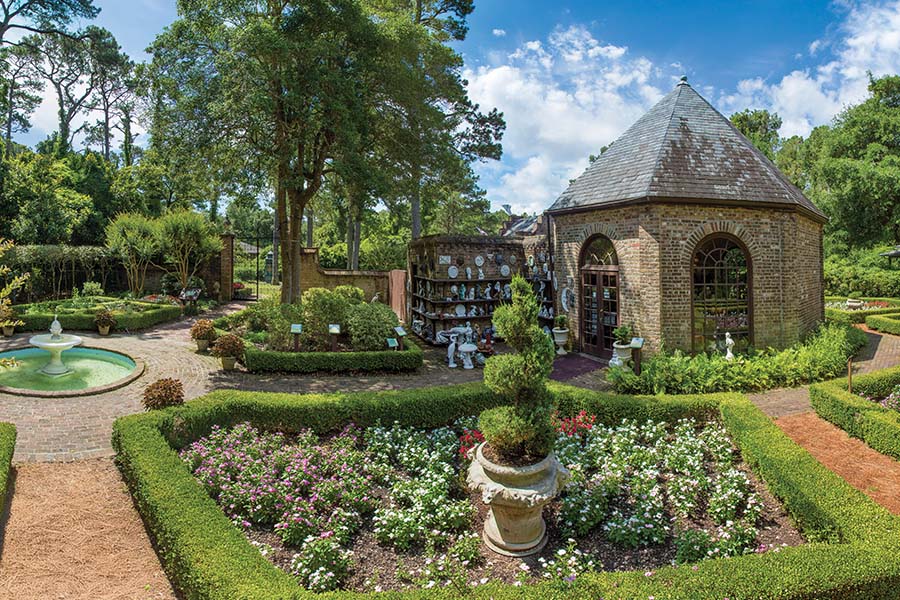
In April, May and June you’ll find a rainbow of blooms all around the property. Depending on the month, you’ll see colorful camellias, magnolias, azaleas, tulips, hyacinths, daffodils, pansies, dogwoods, roses, foxglove, Shasta daisies, hydrangeas and so much more in their seasonal display.
The experience is immersive. Dappled sunlight filters through the leaves overhead, and the scent of flowers drifts through the air. Birds sing in the branches (the gardens are part of the North Carolina Birding Trail, by the way), and butterflies and bees move from blossom to blossom. It’s a place that invites you to slow down and savor nature.
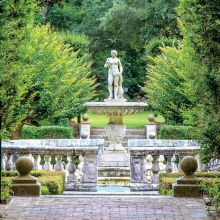
But there’s more here than flowers and trees. Many artistic and historical elements are woven into the landscape, including an imposing bronze statue of Queen Elizabeth I with an ornate gown sculpted in remarkable detail. Nearby, a mid-19th century statue of an idealized adult Virginia Dare, the first English child born in the New World, honors Roanoke Island’s place in American history. The Sunken Garden is one of the Gardens’ most striking spaces with a formal terrace with a fountain, pool, balustrades and a statue of Aphrodite that once graced an Italian village and the Georgia estate of the Honorable John Hay Whitney, all surrounded by twisting crape myrtles. Later this year, specialists from Heritage Conservation Collective in Philadelphia will begin restoring the 16th-century statuary and fountain in the Sunken Garden.
From the impressive centuries-old iron gates (a gift from the French Embassy in Washing ton, D.C.) the brick wall and gatehouse at the entrance, to the Overlook Terrace offering expansive views of the Croatan Sound, to the 450-year-old live oak spreading its branches across the Great Lawn, The Elizabethan Gar dens is an inspiring place for photographers, gardeners or anyone who appreciates beauty. Signage and an optional audio tour guide visitors through the features one by one.
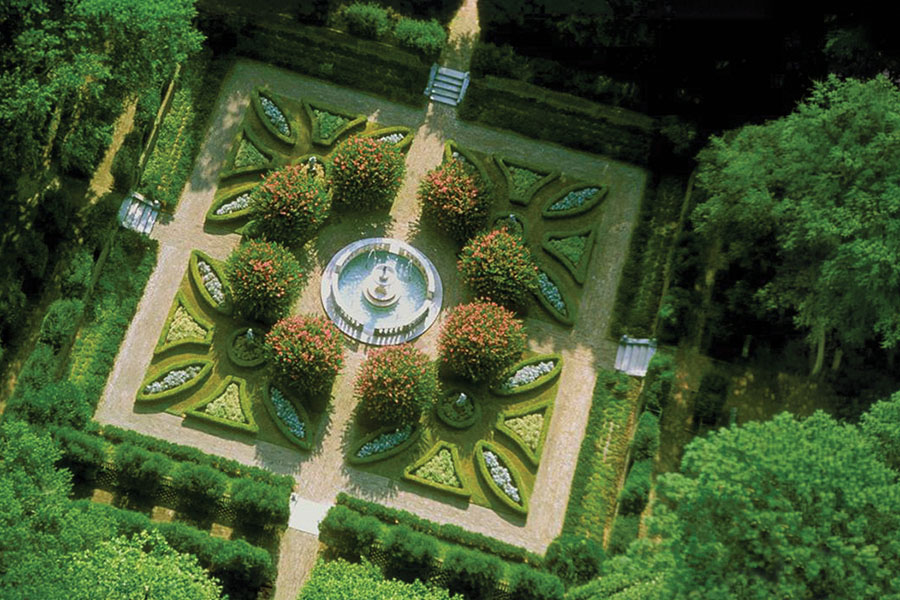
In 2025 The Elizabethan Gardens unveiled its new Sensory Garden, a space designed to engage visitors through touch, fragrance, sound, sight and taste. Raised garden beds make the space wheelchair accessible, while plants are selected specifically to spark curiosity and invite interaction.
“The Sensory Garden was created to awaken the senses and spark curiosity,” Medlin says. “It reflects our commitment to making the gardens accessible and enriching for everyone.”
This spring you’ll also witness a little sprucing up that’s been completed over the past months. For the past decade, staff have been planning a shoreline restoration project to address erosion along the Croatan Sound, where about 40 feet of shoreline has been lost over the years. Work to reinforce the shoreline with protective sills and granite revetments began this spring.
Beyond a botanical attraction, The Elizabethan Gardens is an award-winning wedding venue (named 2026 Best of the Beach Wedding Venue), a place for garden workshops and floral design classes and children’s programs. The greenhouse nursery offers heirloom and native plants and pollinator-friendly selections grown by the garden staff, while the Royal Exchange Gift Shop features garden decor, nature-inspired gifts and regional items. And throughout the year, seasonal events like Eastertide, Autumn Ale Faire, A Night of 1587 Pumpkins and WinterLights bring the community together.
Butterfly Releases
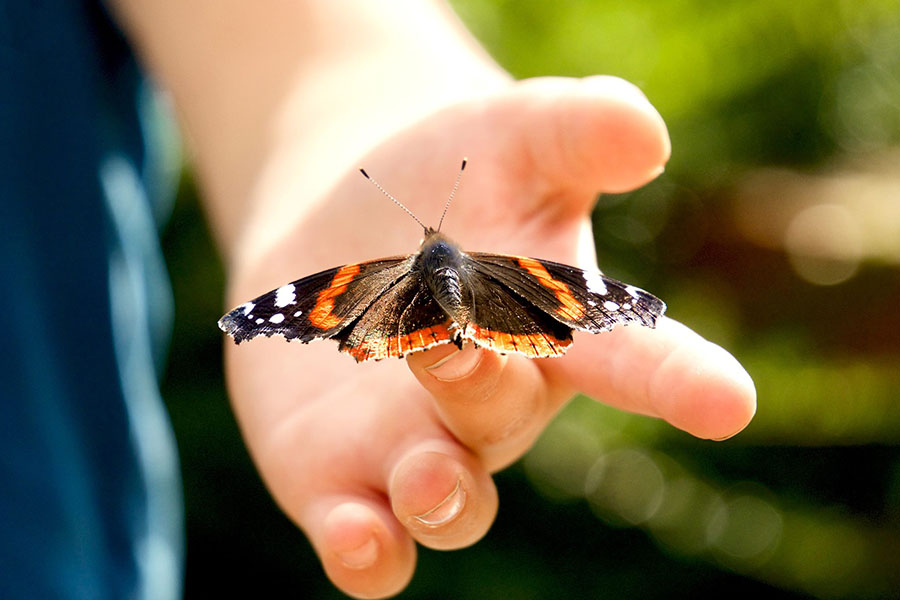
One of the most memorable experiences at the gardens happens twice each week. From April through September, visitors can participate in the Butterfly Release Program, held on Wednesdays and Thursdays at 10 a.m. and 2 p.m. Each guest receives a native butterfly perched on a faux nectar flower. After a brief talk about pollinators and the role butterflies play in the ecosystem, participants release their butterfly into the gardens where they help pollinate flowers throughout the landscape. The program also highlights the gardens’ role as habitat for native pollinators and the importance of planting gardens that support them.
(252) 473-3234
elizabethangardens.org
1411 National Park Drive, Manteo
About the Author Molly Harrison
 Molly Harrison is managing editor at OneBoat, publisher of OuterBanksThisWeek.com. She moved to Nags Head in 1994 and since then has made her living writing articles and creating publications about the people, places and culture of the Outer Banks.