
What got Outer Bankers abuzz in 2025? To be sure, the collapse of 16 houses in the ocean on Hatteras Island – along with the viral jaw-dropping videos – dominated, but the conversations also included ferry tolls, local shrimp and the long-running debate about how we protect the lifelines that connect our islands. Add in a rare snow day and a handful of big anniversaries, and you’ve got a year that felt equal parts awe-inspiring, exhausting and heartwarming too.
Here are a few of the Outer Banks topics that dominated the chatter in 2025.
Photo by Daniel Pullen
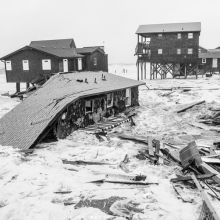
Buxton Houses Collapse into Ocean
It’s hard to overstate how much the house collapses on Hatteras Island defined Outer Banks news this fall. Viral videos of homes tumbling into the Atlantic were shared far beyond North Carolina – often without context and always with a sinking feeling for anyone who loves this place.
In a six-week period this fall, 16 homes collapsed – 15 in Buxton and one in Rodanthe – leaving behind a dangerous mess of debris and forcing beach closures. Since 2020, 27 houses have fallen into the ocean on Hatteras Island. The images are always dramatic, but the aftermath is the real story: debris scattered for miles, public safety concerns, complicated, costly cleanups and renewed debate on how to move forward. Many locals volunteered their time to help the National Park Service clean the beaches.
During one especially punishing stretch, Buxton – home to about 1,000 residents – was suddenly being described in national coverage as “ground zero” for climate change. Whether you agree with that framing or not, the why behind the collapses was clear: severe erosion, fueled by repeated storm impacts, high tides, relentless wave energy, and, many say, the failed jetty. What the viral videos failed to convey is that the destruction is limited to a small portion of the oceanfront. The villages of Hatteras Island and the majority of the oceanfront are out of harm's way.
It is the kind of situation that makes you realize the shoreline isn’t just scenery – it’s also infrastructure, safety and community identity.
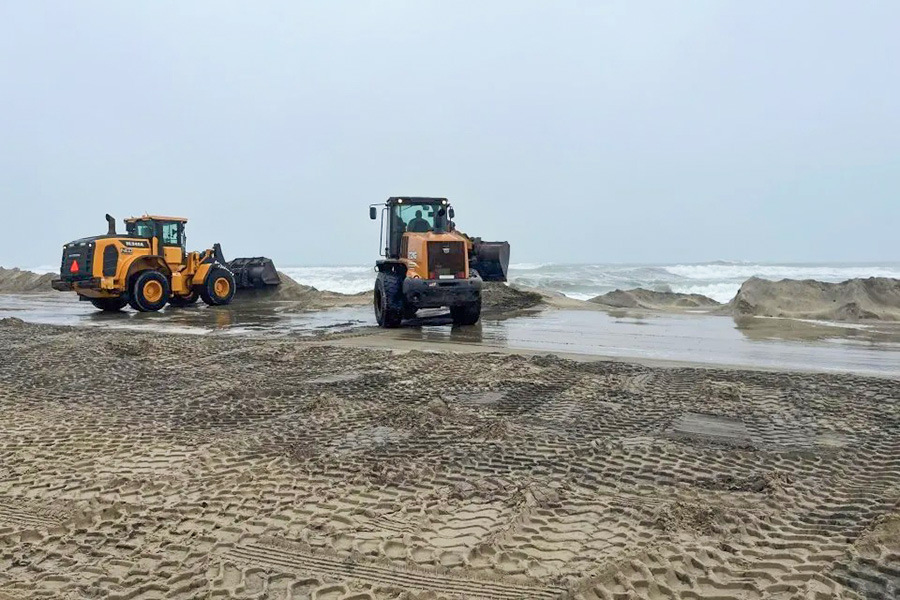
Clearing sand from N.C. 12 during a nor'easter. Photo courtesy N.C. DOT
Nor’easters, Hurricanes and Ocean Overwash
The U.S. may have avoided a hurricane landfall in 2025, yet the Atlantic basin still produced 13 named storms and five hurricanes, with significant impacts arriving through surf, swells and flooding. Even when storms didn’t make a direct hit, 2025 delivered an unusually punishing storm and swell season for the Outer Banks.
Several high-energy wave events occurred during the summer and fall, including multiple events with wave heights over 15 feet. Hurricane Erin passed offshore in late August with waves over 17 feet. There was also a late September/early October swell event peaking over 15 feet, a powerful nor’easter in mid-October during seasonal high tides, and a late October coastal low that pushed waves over 18 feet. This translated to dune scarping, loss of dry beach berms and ocean overwash in familiar weak spots. N.C. Highway 12 closures were common in places like Pea Island and portions of Hatteras and Ocracoke islands, with sand and saltwater repeatedly claiming the road.
Transportation Talk
If erosion is the headline, transportation is the daily grind. N.C. 12, the Outer Banks’ essential lifeline, remains especially vulnerable through Pea Island and northern Ocracoke. When overwash happens, it isn’t just a vacation inconvenience. It affects school schedules, emergency access, deliveries, work commutes and the basic ability to live on a barrier island. Cape Hatteras schools, in particular, felt the ripple effects this fall with more than a dozen cancellations, delays and remote switches. The topic of N.C. 12's overwash hotspots never really goes away, but a fall season like this one makes the conversation more urgent.
Meanwhile, one of the biggest long-term transportation stories moved forward: the $523 million new Alligator River Bridge project. The new fixed-span bridge will replace the swing-span Lindsay C. Warren Bridge that connects Dare and Tyrrell counties. This is a major milestone as the aging swing-span structure often causes delays – and huge detours when it malfunctions. The timeline is long, with the opening projected for fall 2029, but steady progress is happening. As of November, 75 percent of the pilings had been placed.
And then there was the age-old ferry debate. The N.C. Legislature once again proposed tolling of the Hatteras-Ocracoke Ferry re-igniting a familiar fight, with islanders and advocates arguing that tolls would unfairly hit residents, workers and the local economy. Read a local's perspective here.
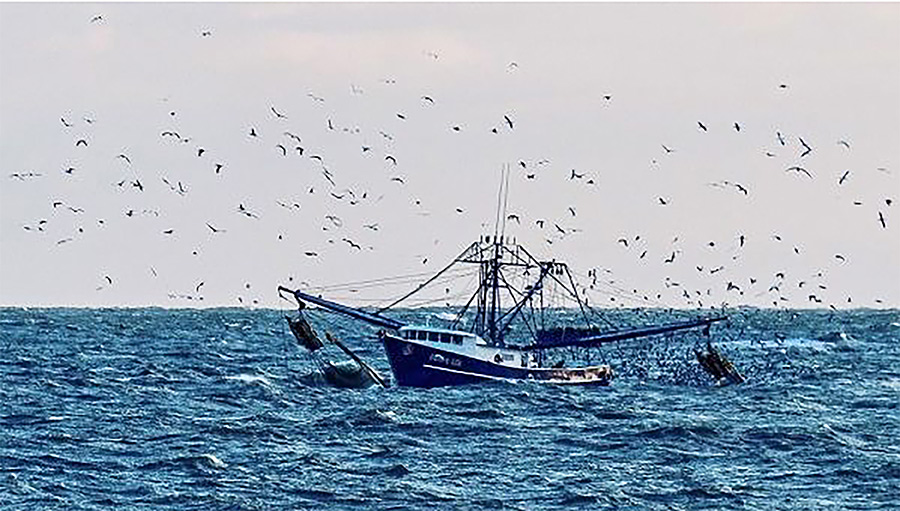
Photo: A shrimp trawler at work along the Outer Banks coast.
Shrimpgate
Nothing rallies this coastline like seafood. In 2025, a proposed N.C. shrimp-trawling restriction sparked a wave of backlash and mobilization from commercial fishermen and coastal communities who saw it as a direct threat to local livelihoods. Commercial fishermen and N.C. residents rallied to help save N.C. shrimp, and the bill to ban N.C. shrimp trawling ultimately failed.
The debate wasn’t only about economics (though the numbers are big, with shrimp tied to major value and jobs statewide). It also opened up a bigger conversation about eating local vs. imported seafood with fewer regulations and a whole lot less flavor.
In December 2025, that issue was brought closer to the forefront when the Southern Shrimp Alliance issued a report alleging that many local restaurants claimed to be serving locally caught shrimp while actually serving imported shrimp. Out of 44 restaurants tested, only 16 were actually serving wild-caught American shrimp.
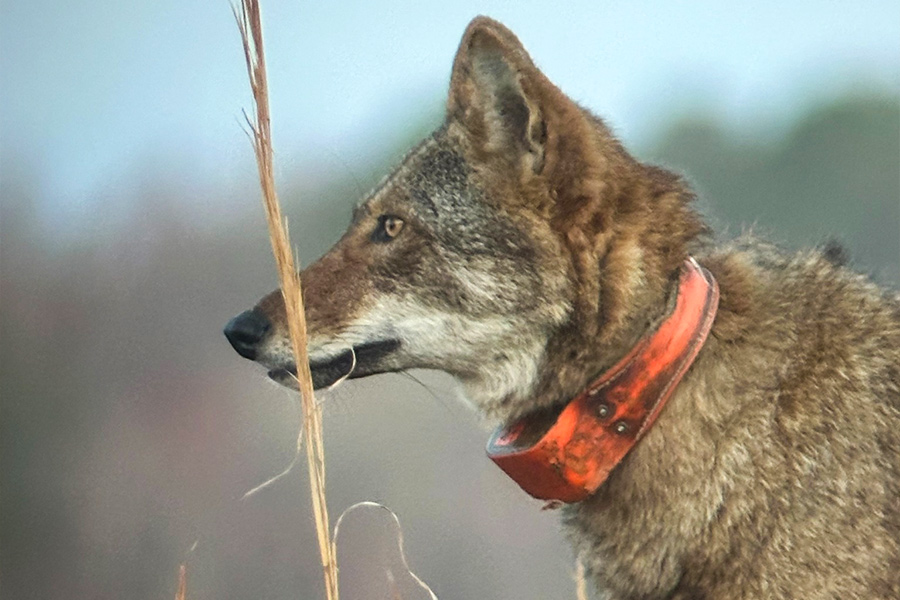
A wild red wolf in Alligator River National Wildlife Refuge, collared by the U.S. Fish and Wildlife for tracking purposes. Photo courtesy USFWS
Protecting Red Wolves
One of the most important Outer Banks region stories is also one of the most hopeful: the endangered red wolves found in the wild only in eastern North Carolina.
With only 18 red wolves living in the wild on the planet (all of them at Alligator River National Wildlife Refuge), every life matters and every loss is critical. Vehicle strikes are a major concern, and public awareness campaigns (including movable signage) aim to protect wolves as they cross highways like U.S. 64. A major bright spot: a $25 million Wildlife Crossing Pilot Program grant awarded to NCDOT will support plans for wildlife underpasses, with construction expected to begin in 2026.
Dare County Property Revaluation
Dare County's 2025 property revaluation saw overall property values rise by 67 percent. The total value of taxable properties in the county was reported to be just under $27.5 billion compared to the $16.4 billion in assessed value in 2024 before the revaluation. When the last county revaluation occurred in 2020, the tax base was $15.9 billion. The six Dare County municipalities lowered their tax rates in response to the significant rise in property values.
The Lost Colony is Not Lost
Renowned British archaeologist Dr. Mark Horton and Hatteras Island native Scott Dawson, who have been conducting archeological digs in Buxton and Frisco for years, released mountains of evidence that show the disappearance of the Lost Colony is not a mystery. They say their evidence proves the colony simply moved south to Hatteras Island. Dr. Horton and Dawson have collected countless pieces of evidence that the Europeans were mingling with the local Native Americans in the late 16th century. They have found tools from repurposed bits of metal, a bronze Tudor rose and a Nuremberg token, which is a casting counter that was used on 16th-century ships to count inventory. To learn more, visit Dawson’s museum in Buxton, The Lost Colony Museum and Gift Shop, where you can see this evident on display.
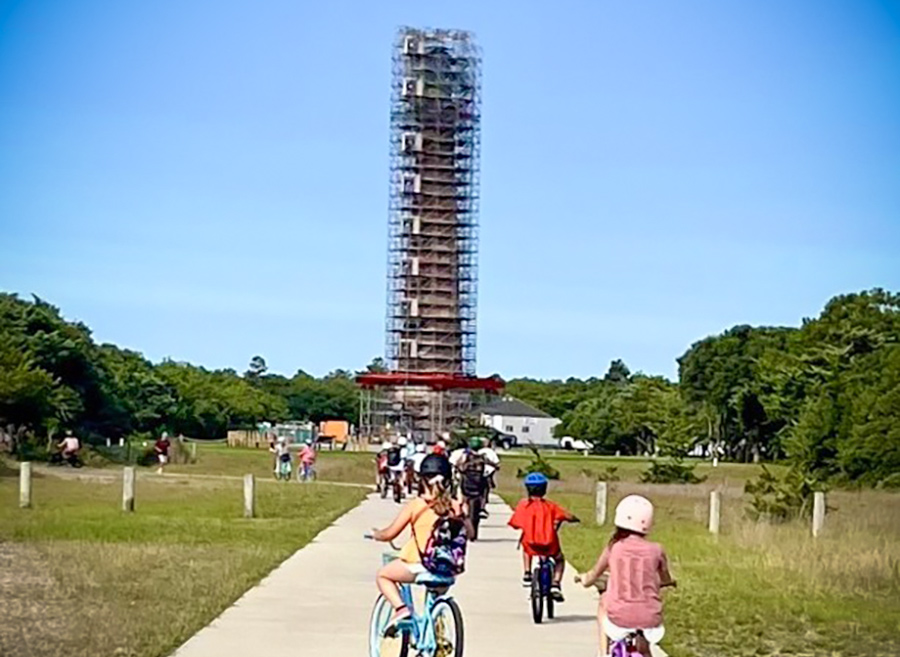
Photo: Cape Hatteras Lighthouse encased in scaffolding for renovations. Photo courtesy of Outer Banks Forever
Cape Hatteras Lighthouse Renovations
Cape Hatteras Lighthouse, America’s tallest lighthouse at 198 feet, is still encased in scaffolding due to an ongoing restoration project, which began in late 2023. The restoration includes rehabilitating the interior and exterior of the lighthouse, repainting the masonry, fabricating a new fence around the Principal Keeper’s Quarters and Double Keepers’ Quarters and a huge list of other projects. It’s an immense effort, and while much progress has been made, a few setbacks have occurred. A completion date has not been established. The lighthouse is not open, but the grounds are open. See a page about the updates here.
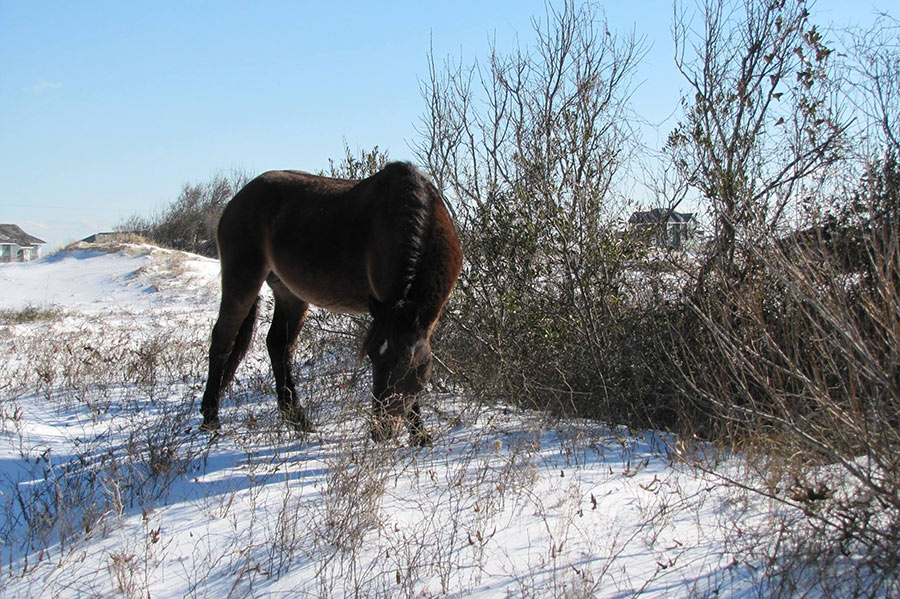
Photo: A wild Banker horse in the snow. Photo courtesy Corolla Wild Horse Fund
A Snow Day to Remember
In January 2025, the Outer Banks woke up to a true snow day with reports of 4 to 9 inches across stretches from the mainland and down the islands from Corolla to Ocracoke. Businesses closed, schools shut down and the islands looked like a wintry postcard. The last comparable snow day was back in January 2018 – so for many locals, it felt like a once-in-a-blue-moon memory.
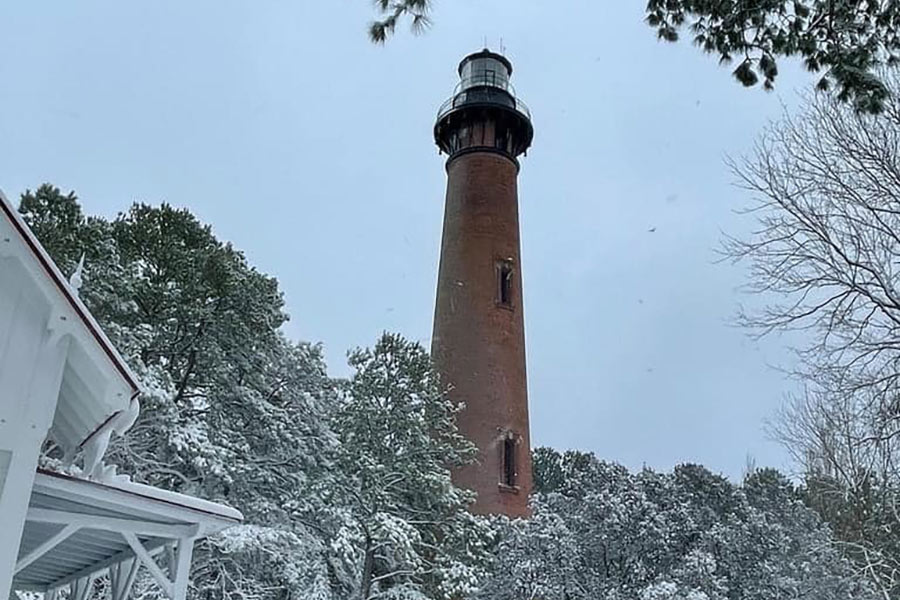
Photo: Currituck Beach Lighthouse celebrated 150 years of service in 2025. Photo courtesy of Outer Banks Conservationists
Iconic Birthdays
Not all the big stories were storms and stress. 2025 also delivered milestone moments that reminded us how much heart and history live here:
- 150 years of Currituck Beach Lighthouse In November and on December 1, we had a chance to honor a historic structure and say a loud thank-you to Outer Banks Conservationists (OBC) for saving the lighthouse and restoring its historic keeper buildings when the site’s future once looked bleak.
- 100 years of Whalehead The iconic yellow Art Nouveau mansion with layers of history (from hunting club glamour to WWII connections to surprising later uses) celebrated its 100th birthday this fall.
- 50 years of Dare Arts Formerly Dare County Arts Council, Dare Arts has kept creativity alive and supported artists countywide for five decades
- 50 years of Jockey’s Ridge State Park Celebrating 50 years of Jockey’s Ridge in June was a reminder that one person (Carolista Baum) and a determined community can protect something extraordinary.
- 40 years of The Sanderling Resort For its 40th birthday, The Sanderling saw a major renovation and remodel and welcomed Theodosia, a new restaurant by star chef Vivian Howard.
- 20 years of Outer Banks Relief Foundation Celebrating 20 years in October, Outer Banks Relief Foundation was honored for its consistency with helping locals in need. Since 2005, the organization has helped from 150 to 200 local households with financial support in times of crisis.
- 20 years of Community Care Clinic of Dare This organization offers essential medical, dental and pharmacy care to uninsured and underinsured individuals who live or work in Dare County.
The Takeaway
If 2025 had a theme, it was this: The Outer Banks is breathtaking but also a fragile and complex community worth fighting for.
We can’t control the storms, but we can and do show up for the cleanup, the policy debates, the nonprofits preserving our landmarks, the fishermen defending local waters and the conservationists protecting everything from historic structures to endangered wildlife. When things get tough, the community gets louder, smarter and more determined to protect what we love.
About the Author Molly Harrison
 Molly Harrison is managing editor at OneBoat, publisher of OuterBanksThisWeek.com. She moved to Nags Head in 1994 and since then has made her living writing articles and creating publications about the people, places and culture of the Outer Banks.