
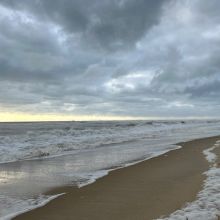
We all love the Outer Banks beach in summer, that’s a given. Long, sun-soaked days, salty swims, sandy feet and that unmistakable scorched July feeling. But here’s a little local secret: The Outer Banks beach in winter is just as magical, and in some ways even better.
In winter, the beach becomes a completely different place. It’s quieter, wilder and deeply peaceful.
Empty Beaches & Wild Beauty
What I love about the Outer Banks beach in winter is how empty it is. Crest the dunes on a crisp winter morning and you’ll likely find nothing but sand, sea and sky stretching in both directions. You might see a few people if you’re in town, but the farther away from the towns you go, the fewer people you’ll see and the more surreal it feels to have the beach all to yourself. The Carova/Corolla beaches and Cape Hatteras National Seashore beaches are often wonderfully devoid of people.
One reason, of course, is the conditions. Winter storms and nor’easters bring raw weather. The wind can be fierce, and the sand stings a little. You may have to run from big washes of waves. But those conditions often create the most memorable beach walks. My advice is to bundle up, zip everything tight and head out anyway. With no one else around, you can talk to yourself, sing out loud, dance, make seashell and feather art in the sand, meditate or stand on your head if you're so inclined.
Word to the wise: always walk into the wind first. Get the tough part out of the way so the return walk is a breeze. Rookie mistakes have been made (ahem, me last weekend, and I KNOW better).
Another practical tip: If you’re heading out for a long walk, take note of where you entered the beach. The shoreline starts to look the same in every direction when there are no chairs, tents or lifeguard stands to help you mark your place.
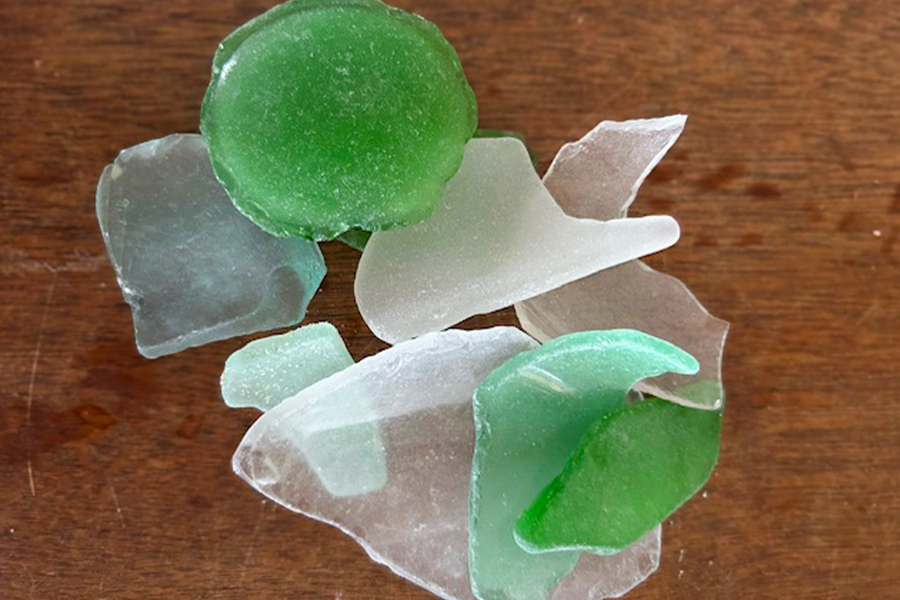
Photo: Sea glass is a favorite Outer Banks beach find. Put in the time scouring the beach and you'll eventually find some.
Prime Time for Beachcombing
Winter beachcombing on the Outer Banks is unmatched. Those winter storms and prevailing northeasterly winds can really wash in the treasures. After a blow, once the wind switches around to the west and the tide drops, the treasures are waiting to be found.
Sea glass, driftwood, whelks, olives, scallops, moonsnails, cockles, sea stars and skate egg cases are frequent winter finds on the northern Outer Banks. Farther south on lower Hatteras and Ocracoke you might also find limpets and scotch bonnets. All along the Outer Banks, winter shell beds can stretch for long distances, offering hours of treasure hunting. The bonus is that you have less competition out there looking for shells and sea glass with you.
Beachcombing Tips
- Go at low tide, or within a few hours on either side.
- Early mornings are often best but that’s not a hard rule. Go when you can.
- Leave shells that are inhabited (whelks, moonsnails) or throw back creatures that might still be alive (moving pink sea stars, crabs, brown furry sand dollars)
- For good karma, bring an extra bag and pick up plastic bits, bottle caps, cigarette butts, balloons and other debris along the way.
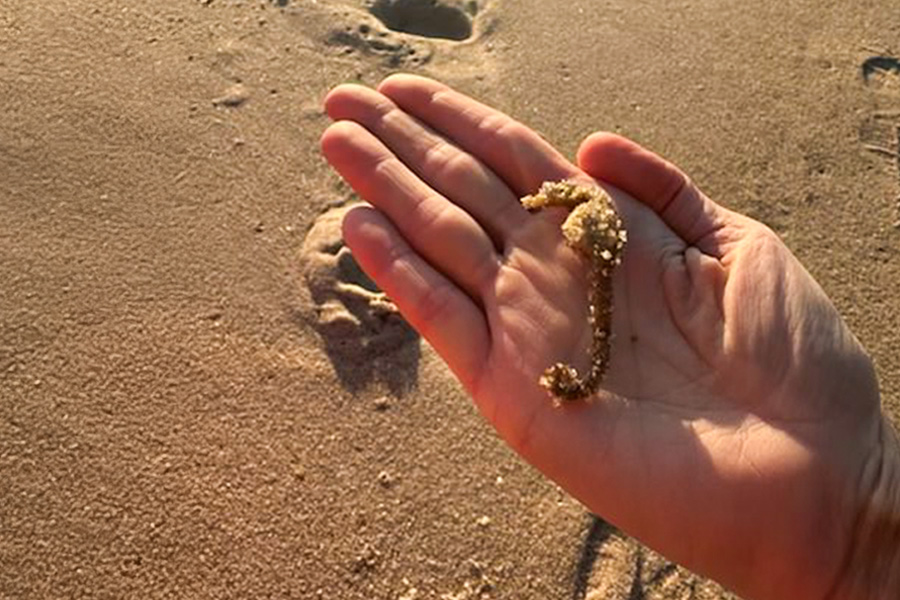
Photo: What did I find on the beach this week? A seahorse! So exciting! It was wriggling, so I put it back in the ocean.
Wildlife Sightings (From a Respectful Distance)
Winter beach walks sometimes come with unexpected bonuses. Seals, loons or gannets resting on the shoreline and the occasional beached whale or stranded sea turtle happen this time of year.
Always keep a safe distance from wildlife. If you encounter an animal that appears injured or stranded, report it to local authorities or call the Marine Mammal Stranding Hotline at (252) 564-2733.
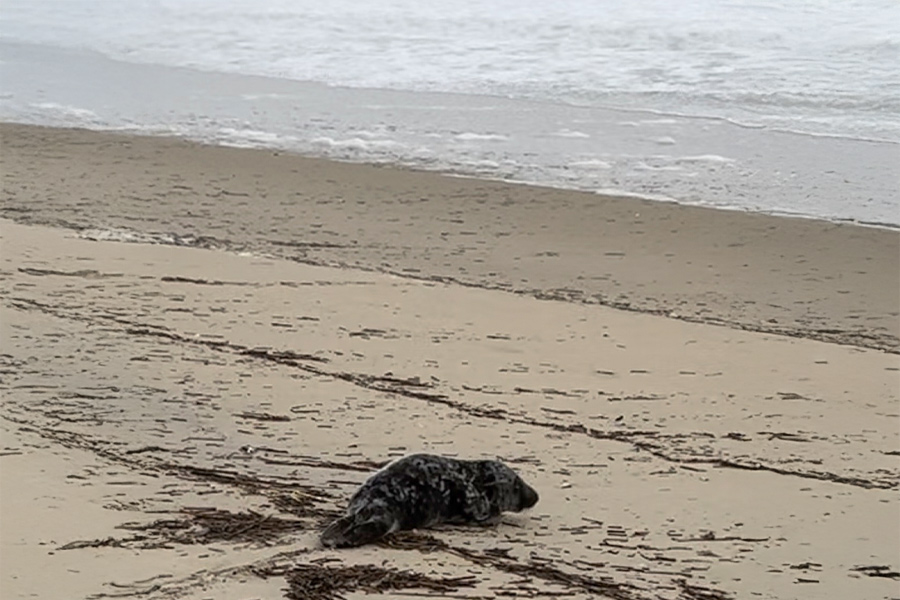
Photo: A seal rests on a Nags Head beach. This was taken last winter from a distance. Remember to stay at least 50 feet away from animals if you come upon them.
Winter Is for Dogs on the Beach
One of the joys of winter on the Outer Banks is how dog-friendly the beaches become. With fewer people around, you’ll often find locals letting their pups stretch their legs along the shoreline.
Here’s a quick refresher on off-season dog rules by town.
- Corolla: Dogs allowed year-round on a leash
- Duck: Dogs may be off-leash year-round under voice control
- Southern Shores: Leash required; dogs allowed off-season (Sept. 15 to May 15)
- Kitty Hawk: Leash-free from Labor Day to Memorial Day within 30 feet of owner
- Kill Devil Hills: Leash required; dogs allowed anytime of day off-season
- Nags Head: Dogs allowed year-round on an 8-foot or shorter leash
- Cape Hatteras National Seashore: Dogs allowed on a leash of at least 6 feet
For in-season information, click here.
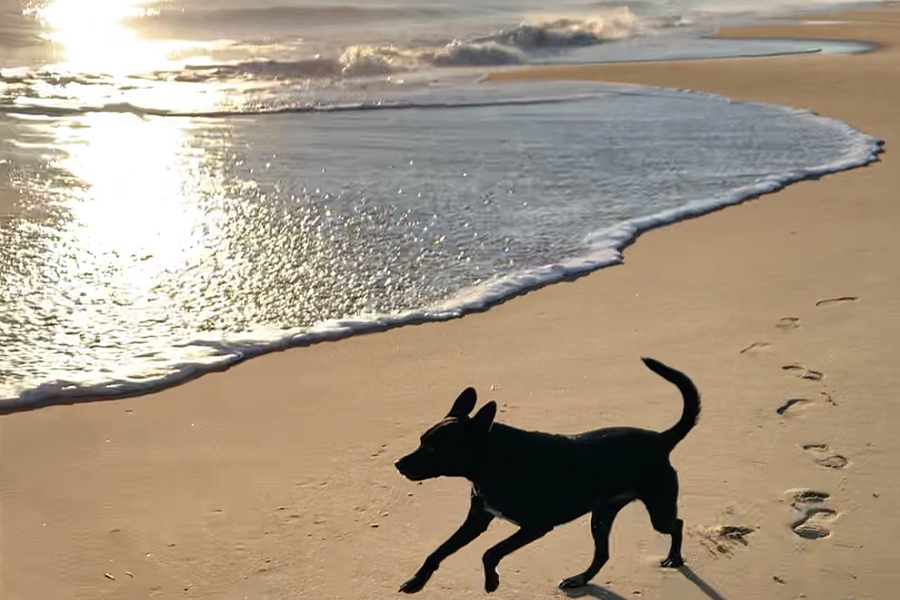
Photo: Dogs are allowed on the Outer Banks beaches in winter. Most areas require a leash, but in Duck and Kitty Hawk it's OK to have your dog off-leash.
Cozy Up Around a Winter Beach Bonfire
Cold weather makes beach bonfires especially inviting. On those calm, mild winter evenings without much wind, nothing beats the glow of a fire with the ocean nearby. Beach bonfires are allowed only in the Town of Nags Head and in Cape Hatteras National Seashore.
Nags Head Beach Bonfires
- Permits required and issued daily online between 5:30 and 9 p.m.
- Fires must be extinguished by midnight
- Wind speed must be under 11.5 mph (measured at Jennette’s Pier)
- Permits cost $10 (+ $1 convenience fee online)
To access the Online Beach Pit Fire Permitting System, go to Nags Head Fire and Rescue.
Cape Hatteras National Seashore Bonfires
- Permits are free
- From November 16 to April 30 fires are allowed throughout the entire park
- Fires allowed 6 a.m. to 10 p.m.
- Must be under 3 feet in diameter, below the high tide line and at least 50 feet from vegetation
- Fires must be attended and completely extinguished
Buy Cape Hatteras National Seashore permits here BEACH FIRE PERMIT. If you have trouble downloading or printing the Beach Fire Permit you can get a permit in person by visiting Bodie Island Vistior Center, Cape Hatteras Lighthouse Visitor Center or Ocracoke Island NPS Visitor Center.
Winter Beachside Camping
For the ultimate winter beach experience, two National Park Service campgrounds in Cape Hatteras National Seashore are open all year round. Oregon Inlet Campground and Ocracoke Campground welcome tents, camping trailers and RVs all year, and at these two sites you’re sleeping just behind the dunes and will have easy access to long stretches of National Seashore beach to explore. Get the information you need at Campgrounds - Cape Hatteras National Seashore (U.S. National Park Service)
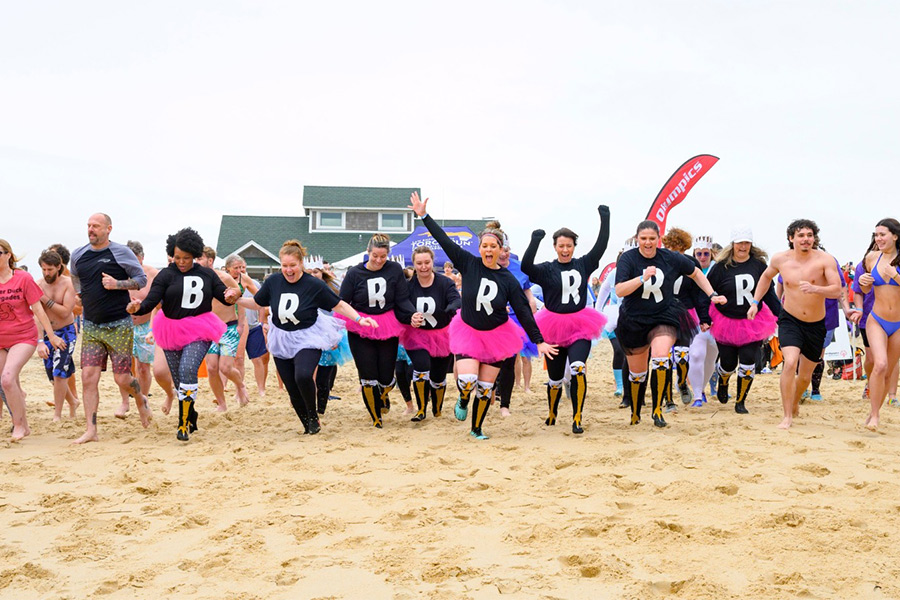
Photo: Winter ocean swimming is uncomfortable but good for you and safe for most people. The Polar Plunge for Special Olympics, held at Jennette's Pier, welcomes hundreds of winter ocean swimmers.
Winter Beach Events Worth Getting Out For
Locals and visitors gather up for a few winter events on the beach.
Surfrider Foundation Outer Banks Big Beach Cleanup
Saturday, February 21 | Various locations | 9:30 a.m. to 1 p.m.
As part of Thrive Month on the Outer Banks, join ThriveOBX, Surfrider Foundation Outer Banks and volunteers from Duck to Buxton and Roanoke Island to Wanchese to help clean more than 74 miles of coastline. Get information and sign up here Big Beach Cleanup and Keep Our Island Clean Day - ThriveOBX
Polar Plunge for Special Olympics North Carolina
Saturday, February 28 | Jennette’s Pier, Nags Head | 10 a.m. to 12 p.m.
Brrrrr! Take a chilly plunge into the Atlantic Ocean to support Special Olympics athletes across North Carolina. Costumes are encouraged, and prizes will be awarded for best costumes and top fundraisers. Registration is from 10 to 11 a.m. The plunge is at 11:30 a.m. Cost to plunge is $75 per participant or you can start a fundraising team. See event.
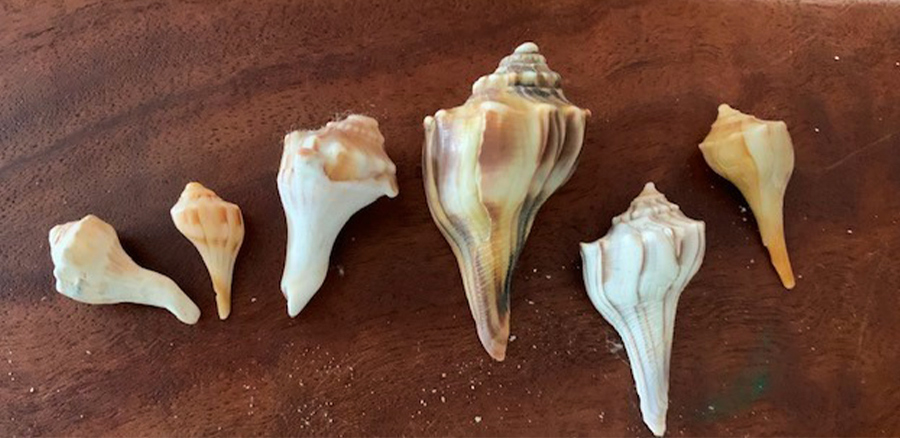
Photo: Whelks are a common winter find on the Outer Banks, especially after a hard northeast blow.
The Quiet Magic of Winter
Winter on the Outer Banks beach is not about crowds, flapping Shibumis or packed parking lots. It’s about space and solitude. It’s about windburned cheeks, pockets full of shells and long walks that clear your head.
If you’ve only ever experienced the Outer Banks in summer, winter might just surprise you — and once you fall in love with the quiet season, you may never see the beach the same way again.
About the Author Molly Harrison
 Molly Harrison is managing editor at OneBoat, publisher of OuterBanksThisWeek.com. She moved to Nags Head in 1994 and since then has made her living writing articles and creating publications about the people, places and culture of the Outer Banks.